Highlights
Output Frequency (Sine): 100 MHz
Output Frequency (Square): 25 MHz
Channels: 2
Arbitrary Waveform Length: 16 Mpts
Kenmerken
Unique SiFi II (Signal Fidelity II) technology: generate the arbitrary waveforms point by point; recover the signal without distortion; sample rate accurate and adjustable; jitter of all the output waveforms (including Sine, Pulse, etc.) as low as 200 ps
16 Mpts memory depth per channel for arbitrary waveforms
Standard dual-channel with the same performance, equivalent to two independent signal sources
High frequency stability: ±1 ppm; low phase noise: -105 dBc/Hz
Built-in high-order harmonic generator (at most 8-order harmonics)
Built-in 7 digits/s, 240 MHz bandwidth full featured frequency counter
Up to 160 built-in arbitrary waveforms, covering the common signals in engineering application, medical electronics, auto electronics, math processing, and other various fields
Sample rate up to 250 MSa/s, vertical resolution 16 bits
Arbitrary waveform sequence editing function available; arbitrary waveforms also can be generated through the PC software
Various analog and digital modulation functions: AM, FM, PM, ASK, FSK, PSK, and PWM.
Standard waveform combine function, capable of outputting specified waveforms combined with the basic waveforms
Standard channel tracking function, when enabled, all the parameters of both channels are updated based on users' configurations
Standard interface: USB Host&Device and LAN (LXI Core 2011 Device); USB-GPIB function supported
4.3'' TFT
Inbegrepen
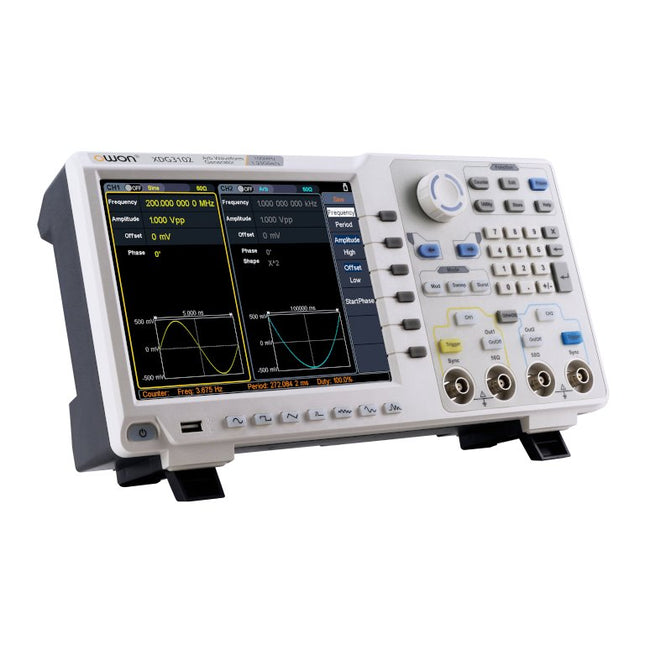
1x Rigol DG2102 Function/Arbitrary Waveform Generator
1x Power cord
1x USB cable
Alles-in-één AI-leer- en ontwikkelplatform voor Edge Intelligence
Deze op NVIDIA Jetson gebaseerde AI-starterkit is een veelzijdig platform voor leren, ontwikkelen en praktisch experimenteren met Edge AI.
De kit is ontworpen voor gebruik met de NVIDIA Jetson Orin Nano en combineert een 11,6-inch IPS-scherm, een 8-megapixel pan-tilt-camera en een AI-systeem voor spraakinteractie.
Het pakket bevat 30 functionele modules en 38 zorgvuldig samengestelde Python-cursussen die variëren van beginners- tot gevorderd niveau. De cursusinhoud behandelt de basisbeginselen van Python, sensortechnologie, AI-vision en beeldherkenning.
Dankzij stapsgewijze praktijkoefeningen – variërend van basisprogrammering tot praktische toepassingen van computer vision – vormt deze kit een ideaal platform voor studenten, makers, ontwikkelaars en iedereen die zich wil verdiepen in kunstmatige intelligentie en edge computing.
Let op: De NVIDIA Jetson Orin Nano is niet inbegrepen.
Kenmerken
Ontworpen voor de NVIDIA Jetson Orin Nano
AI-module voor spraakinteractie
8 MP-camera met pan-tilt-besturing
Ondersteunt object- en gezichtstracking
Geen solderen of complexe bedrading nodig
Ingebouwd 11,6-inch IPS-scherm
30 functionele modules
38 stapsgewijze Python-lessen
Uitbreidingsinterfaces voor I²C, UART en GPIO
Inclusief draagtas
Specificaties
Hoofdprocessor
Jetson Orin Nano
Aantal sensoren
30
Ontwerp sensorbord
Geïntegreerd sensorbord; solderen of complexe bedrading niet nodig
Scherm
11,6-inch IPS-scherm
Schermresolutie
1366 x 768
Camera
IMX219 8MP
Uitbreidingsinterfaces
2x I²C, 1x UART, 1x IO D13, 1x IO D12
Programmeeromgeving
Gebaseerd op Python
Aantal tutorials
38 creatieve tutorials
Doelgroep
Studenten, docenten, hardware-enthousiastelingen
Toepassingen
Ideaal voor het leren programmeren van AI en de basisbeginselen van de Jetson Orin Nano
Afmetingen
300 x 200 x 100 mm
Modulelijst
Module
Aantal
Temperatuur- en vochtigheidssensor
1 st.
Drukknop
4 st.
Ultrasone afstandssensor
1 st.
Lichtsensor
1 st.
Lineaire potentiometer
1 st.
Zoemer
1 st.
LCD-scherm
1 st.
Infraroodafstandsbediening
1 st.
Relais
1 st.
NFC-module
1 st.
PIR-bewegingssensor
1 st.
Joystick
1 st.
4-cijferig display
1 st.
LED
1 st.
Microfoon
1 st.
Luidspreker
1 paar
Trilmotor
1 st.
Aanraaksensor
1 st.
8x8 RGB-matrix
1 st.
Luchtdruksensor
1 st.
Kantelschakelaar
1 st.
Stappenmotor
1 st.
Versnellingsmeter & gyroscoop
1 st.
Gassensor (MQ2)
1 st.
Hallsensor
1 st.
Draai-encoder
1 st.
U-vormige optische schakelaar
1 st.
NTC-sensor
1 st.
Servomotor
2 st.
Monoculaire camera
1 st.
Inbegrepen
1x Elecrow AI Starter Kit voor Jetson Orin Nano
1x Infraroodafstandsbediening
1x NFC-kaart
1x 128 GB SD-kaart
1x 40-pins GPIO-kabel
2x 22-pins FPC-kabel
2x 24-pins FPC-kabel
1x Jetson DP- & USB-adapterbord
Niet inbegrepen
NVIDIA Jetson Orin Nano
Downloads
Manual
Wiki
OpenClaw Install and Config Guide
De FNIRSI DLA-serie combineert krachtige USB 3.0-logica-analyse met flexibele, meerkanaals signaalregistratie voor het debuggen en analyseren van digitale circuits en embedded systemen. De serie is verkrijgbaar in twee uitvoeringen: de DLA-16 Plus met 16 digitale kanalen en de DLA-32 Plus met 32 digitale kanalen.
Beide modellen bieden samplingfrequenties tot 1 GSa/s, 4 Gbit intern geheugen en ondersteuning voor meer dan 120 protocoldecoders. Dankzij de acquisitiemodi Buffer, Stream en Roll zijn ze geschikt voor zowel snelle signaalanalyse als langdurige monitoring.
Kies de DLA-16 Plus voor hogere samplingfrequenties bij gebruik van alle kanalen, of de DLA-32 Plus wanneer u meer kanalen en geavanceerde seriële en parallelle triggering nodig heeft.
Kenmerken
Verkrijgbaar met 16 of 32 digitale ingangskanalen
Bemonsteringssnelheid tot 1 GSa/s
DLA-16 Plus: tot 500 MSa/s bij gebruik van alle 16 kanalen
DLA-32 Plus: tot 250 MSa/s bij gebruik van alle 32 kanalen
4 Gbit intern geheugen
High-speed USB 3.0-interface
Acquisitiemodi: Buffer, Stream en Roll
Ondersteuning voor meer dan 120 protocoldecoders
Geavanceerde triggeropties
4 PWM-uitgangen met een frequentiebereik van 1 Hz tot 20 MHz
Data-export naar CSV en BIN
Specificaties
DLA-16 Plus
DLA-32 Plus
Digitale kanalen
16
32
Max. Sampling rate
1 GSa/s
Sampling rate (1 kanaal)
1 GSa/s
Sampling rate (8 kanalen)
1 GSa/s
Max. Buffer sampling
16 kanalen @ 500 MSa/s
32 kanalen @ 250 MSa/s
Max. Stream sampling
16 kanalen @ 125 MSa/s
32 kanalen @ 50 MSa/s
Hardwaregeheugen
4 Gbit
Interface
USB 3.0 / USB-C
Max. USB-overdrachtssnelheid
5 Gbit/s
Acquisitiemodi
Buffer / Stream / Roll
Protocoldecoders
120+
Ondersteuning voor aangepaste protocollen
Ja
Triggermodi
Stijgende flank, dalende flank, hoog, laag, elke flank
Geavanceerde trigger
Standaard triggering
Serieel en parallel
Parallelle triggerfasen
–
Tot 16
PWM-uitgangen
4
PWM-uitgangsspanning
3,3 V
PWM-frequentie
1 Hz–20 MHz
Gegevensexport
CSV, BIN
Afmetingen
90 x 81 x 11,5 mm
Inbegrepen
1x FNIRSI DLA-16/32 Plus Logic Analyzer
4 Sets van 5 afgeschermde kabels
18x Mini IC-testhaken (uitvoering met uitgebreide configuratie)
1x USB 3.0-datakabel
10x IC-testhaken
1x Transparante opbergdoos voor testhaken
1x Opbergtas
1x Manual
Downloads
Manual
Software for Windows
Software for macOS (Apple Silicon)
Software for macOS (Intel)
Kick off with the MAX1000 and VHDPlus
Ready to Master FPGA Programming? In this guide, we’re diving into the world of Field Programmable Gate Arrays (FPGAs) – a configurable integrated circuit that can be programmed after manufacturing. Imagine bringing your ideas to life, from simple projects to complete microcontroller systems!
Meet the MAX1000: a compact and budget-friendly FPGA development board packed with features like memory, user LEDs, push-buttons, and flexible I/O ports. It’s the ideal starting point for anyone wanting to learn about FPGAs and Hardware Description Languages (HDLs).
In this book, you’ll get hands-on with the VHDPlus programming language – a simpler version of VHDL. We’ll work on practical projects using the MAX1000, helping you gain the skills and confidence to unleash your creativity.
Get ready for an exciting journey! You’ll explore a variety of projects that highlight the true power of FPGAs. Let’s turn your ideas into reality and embark on your FPGA adventure – your journey starts now!
Exciting Projects You’ll Find in This Book
Arduino-Driven BCD to 7-Segment Display Decoder
Use an Arduino Uno R4 to supply BCD data to the decoder, counting from 0 to 9 with a one-second delay
Multiplexed 4-Digit Event Counter
Create an event counter that displays the total count on a 4-digit display, incrementing with each button press
PWM Waveform with Fixed Duty Cycle
Generate a PWM waveform at 1 kHz with a fixed duty cycle of 50%
Ultrasonic Distance Measurement
Measure distances using an ultrasonic sensor, displaying the results on a 4-digit 7-segment LED
Electronic Lock
Build a simple electronic lock using combinational logic gates with push buttons and an LED output
Temperature Sensor
Monitor ambient temperature with a TMP36 sensor and display the readings on a 7-segment LED
Downloads
Software
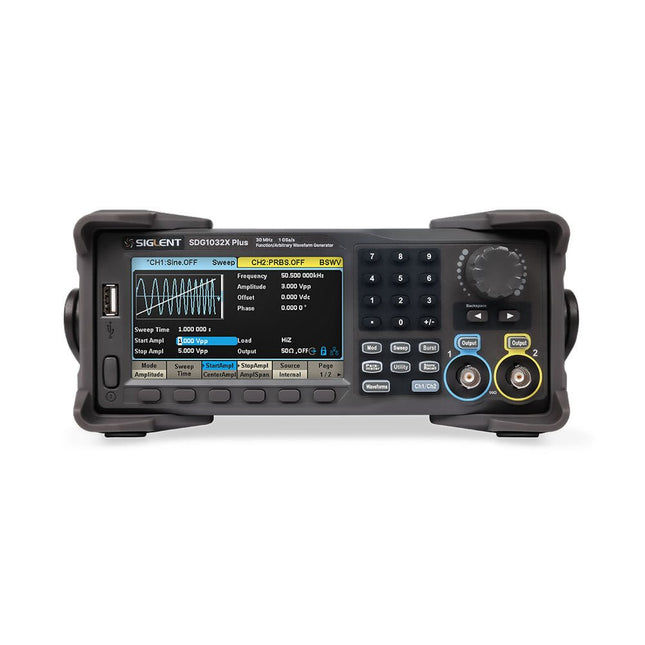
De Siglent SDG1032X Plus is een krachtige dual-channel functie/willekeurige golfvormgenerator met een maximale frequentie van 30 MHz, een resolutie van 16 bits en een bemonsteringssnelheid van 1 GSa/s voor uitstekende signaalgetrouwheid.
Het beschikt over TrueArb voor golfvormen met lage vervorming, EasyPulse voor jittervrije pulsen en robuuste sequentieweergave. Met een amplitude van ±10 V, een scherm van 4,3-inch en veelzijdige modulatie is dit een betrouwbare keuze voor ingenieurs en onderzoekers.
Kenmerken
Dual Channels: Onafhankelijke output met maximale frequentie van 30 MHz
Hoge bemonsteringssnelheid: 1 GSa/s voor nauwkeurige golfvormgeneratie
Hoge verticale resolutie: 16-bits resolutie voor nauwkeurige signaalreproductie
TrueArb-technologie: Genereert willekeurige golfvormen met lage vervorming en hoge betrouwbaarheid
EasyPulse-technologie: Produceert jittervrije blok- en pulssignalen met nauwkeurige controle over de stijg-/daltijden
Willekeurige golfvormlengte: Ondersteunt tot 8 Mpts per kanaal voor complex golfvormontwerp
Breed amplitudebereik: ±10 V maximale uitgangsamplitude
Ingebouwde modulatiefuncties: AM, FM, PM, PWM, PSK, FSK, ASK en meer
Multipulsuitgang: Maakt het meten van schakelparameters van elektrische apparatuur mogelijk
PRBS-patroongeneratie: Ondersteunt tot 40 Mbps voor geavanceerde testbehoeften
Sweep- en Burst-modi: Flexibele testmogelijkheden met aanpasbare parameters
Sequence Playback-functie: Slaat complexe golfvormen efficiënt op en speelt deze af
Frequentieteller: Meet frequenties tot 200 MHz met hoge precisie
Gebruiksvriendelijk display: 4,3-inch kleuren-LCD met een duidelijke interface
Ondersteuning voor afstandsbediening: Ingebouwde webserver voor bediening via een webbrowser
Compact ontwerp: Draagbare en ruimtebesparende vormfactor
Specificaties
Bandbreedte
30 MHz
Kanalen
2
Samplingsnelheid
1 GSa/s (4x interpolatie)
Verticale resolutie
16 bits (per kanaal)
Golfvormlengte
8 Mpts
Max. amplitude
±10 V
Display
4,3-inch TFT-LCD-kleurenscherm (480 x 272)
Interfaces
USB-host, USB-apparaat, LAN
Afmetingen
260 x 107 x 296 mm
Gewicht
4,35 kg
Inbegrepen
1x Siglent SDG1032X Plus Arbitraire Golfvormgenerator
1x Netsnoer
1x USB-kabel
1x Garantiekaart
1x Quick Start Guide
Downloads
Datasheet
User Manual
Programming Guide
Software
Elektor GREEN and GOLD members can download their digital edition here.
Not a member yet? Click here.
The ESP-BLASTA Mini ESP32 Rocket Drone That Flies 100 km/h+
Wireless Workshop (1)Radio Modules Unlocked: 433 MHz CC1101 Sub-GHz Transceiver
AM TransmitterWith Square/Sine Wave Generator on Raspberry Pi Pico
STM32Cube Innovation ChallengeCompete with Your Best STM32C5 Design
CoffeeCallerHow a Long Hallway Led to a Custom Mesh-Networked PCB
AudiotronicsTotal Harmonic Distortion
Elektor at 65Projects from Septembers and Octobers Past
Bluetooth Channel Sounding for Asset TrackingCentimeter-Level Precision Ranging for Next-Generation IoT
2026: An AI OdysseyQuantum Computing Is Not the Next GPU
Protecting the Cloud Demands Security at the Edge
First Experiences with the HackRF ProPractical Tests with the New SDR Hardware
Modem Upgrade from GPRS/2G to LTE/4GUsing a Wireless Alarm Control Panel as an Example
Loop Antenna with RF BricksPart 1: A DIY Shortwave Antenna with Adjustable Directivity
Internet Radio to AM ConverterUsing an ESP32-S3 as Transmitter
Err-lectronics
mioty — An OverviewFraunhofer’s Approach to LPWAN
Workbench WisdomPractical Tips from Experts
Walter, the Compact IoT ModulePart 2: Accessing Weather and Data Services
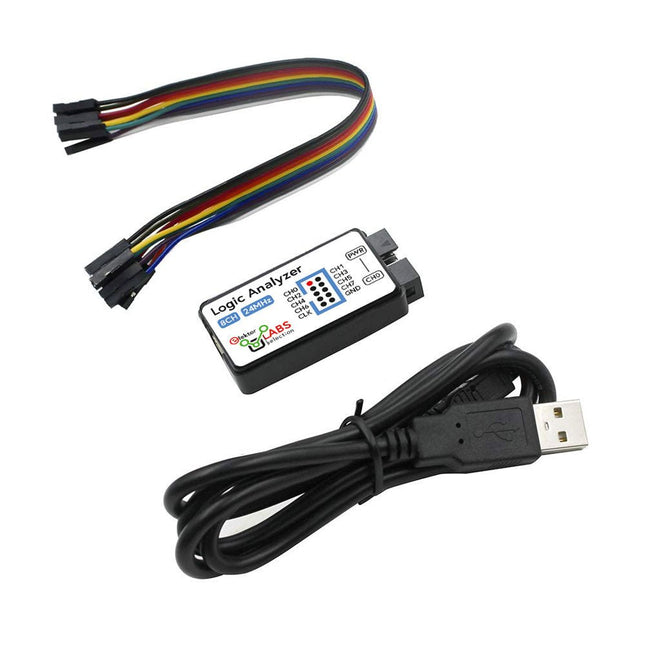
Deze USB Logic Analyzer is een 8-kanaals logic analyzer met elke ingang bedoeld voor het op twee manieren opnemen van analoge data. Hij is perfect voor het debuggen en analyseren van signalen zoals I²C, UART, SPI, CAN en 1-Wire. De analyzer bemonstert een digitale ingang die is aangesloten op een te testen apparaat (DUT) met een hoge bemonsteringssnelheid. De aansluiting op de PC gaat via USB.Specificaties
Kanalen
8 digitale kanalen
Maximale bemonsteringssnelheid
24 MHz
Maximale ingangsspanning
0 V ~ 5 V
Bedrijfstemperatuur
0°C ~ 70°C
Ingangsimpedantie
1 MΩ || 10 pF
Ondersteunde protocollen
I²C, SPI, UART, CAN, 1-wire, enz.
PC-aansluiting
USB
Afmetingen
55 x 28 x 14 mm
Inbegrepen
USB Logic Analyzer (8-kanaals, 24 MHz)
USB-kabel
Jumper Draad Lintkabel
DownloadsSoftware
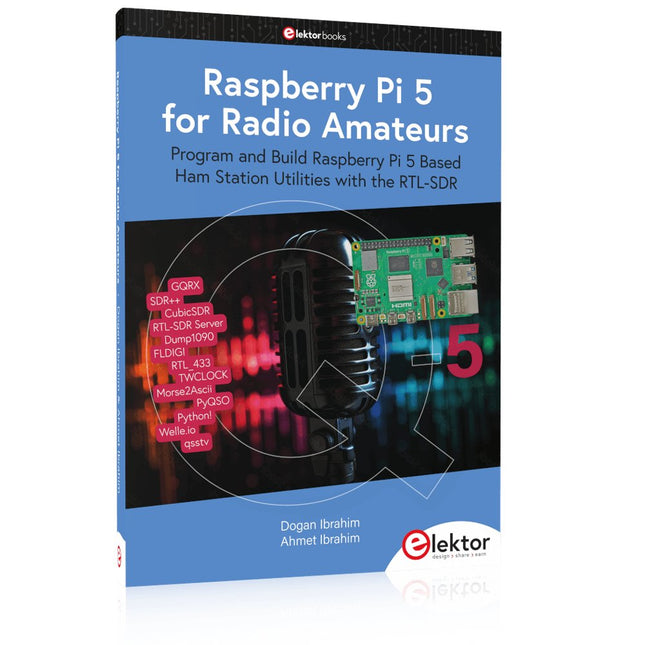
Program and Build Raspberry Pi 5 Based Ham Station Utilities with the RTL-SDR
The RTL-SDR devices (V3 and V4) have gained popularity among radio amateurs because of their very low cost and rich features. A basic system may consist of a USB based RTL-SDR device (dongle) with a suitable antenna, a Raspberry Pi 5 computer, a USB based external audio input-output adapter, and software installed on the Raspberry Pi 5 computer. With such a modest setup, it is possible to receive signals from around 24 MHz to over 1.7 GHz.
This book is aimed at amateur radio enthusiasts and electronic engineering students, as well as at anyone interested in learning to use the Raspberry Pi 5 to build electronic projects. The book is suitable for both beginners through experienced readers. Some knowledge of the Python programming language is required to understand and eventually modify the projects given in the book. A block diagram, a circuit diagram, and a complete Python program listing is given for each project, alongside a comprehensive description.
The following popular RTL-SDR programs are discussed in detail, aided by step-by-step installation guides for practical use on a Raspberry Pi 5:
SimpleFM
GQRX
SDR++
CubicSDR
RTL-SDR Server
Dump1090
FLDIGI
Quick
RTL_433
aldo
xcwcp
GPredict
TWCLOCK
CQRLOG
klog
Morse2Ascii
PyQSO
Welle.io
Ham Clock
CHIRP
xastir
qsstv
flrig
XyGrib
FreeDV
Qtel (EchoLink)
XDX (DX-Cluster)
WSJT-X
The application of the Python programming language on the latest Raspberry Pi 5 platform precludes the use of the programs in the book from working on older versions of Raspberry Pi computers.
Ontdek eindeloze creativiteit met de Universal Maker Sensor Kit, ontworpen voor gebruik met Raspberry Pi, Pico W, Arduino en ESP32. Deze veelzijdige kit biedt compatibiliteit met populaire ontwikkelingsplatforms, waaronder Arduino Uno R4 Minima/WiFi, Uno R3, Mega 2560, Raspberry Pi 5, 4, 3B+, 3B, Zero, Pico W en ESP32.
Met meer dan 35 sensoren, actuatoren en displays is het perfect voor projecten variërend van omgevingsmonitoring en slimme huisautomatisering tot robotica en interactief gamen. Stapsgewijze tutorials in C/C++, Python en MicroPython begeleiden zowel beginners als ervaren makers door 169 spannende projecten.
Kenmerken
Brede compatibiliteit: Ondersteunt volledig Arduino (Uno R3, Uno R4 Minima/WiFi, Mega 2560), Raspberry Pi (5, 4, 3B+, 3B, Zero, Pico W) en ESP32, wat uitgebreide flexibiliteit op verschillende ontwikkelingsplatforms mogelijk maakt. Bevat instructies voor het bouwen van 169 projecten.
Uitgebreide componenten: Bevat meer dan 35 sensoren, actuatoren en displaymodules die geschikt zijn voor uiteenlopende projecten zoals omgevingsbewaking, slimme huisautomatisering, robotica en interactieve gamecontrollers.
Gedetailleerde tutorials: Biedt duidelijke, stapsgewijze tutorials over Arduino, Raspberry Pi, Pico W, ESP32 en elk inbegrepen component. Tutorials zijn beschikbaar in C/C++, Python en MicroPython, en zijn effectief afgestemd op zowel beginners als ervaren makers.
Geschikt voor alle vaardigheidsniveaus: Biedt gestructureerde projecten die zijn ontworpen om gebruikers naadloos te begeleiden van beginners tot gevorderden in elektronica en programmeren, wat de creativiteit en technische expertise vergroot.
Inbegrepen
Breadboard
Knopmodule
Capacitieve bodemvochtigheidsmodule
Vlamsensormodule
Gas-/rooksensormodule (MQ2)
Gyroscoop & Accelerometermodule (MPU6050)
Hall-sensormodule
Infraroodsnelheidssensormodule
IR-obstakelvermijdingssensormodule
Joystickmodule
PCF8591 ADC DAC-convertermodule
Fotoweerstandsmodule
PIR-bewegingsmodule (HC-SR501)
Potentiometermodule
Pulsoximeter- en hartslagsensormodule (MAX30102)
Regendruppeldetectiemodule
Realtimeklokmodule (DS1302)
Rotary Encoder-module
Temperatuursensormodule (DS18B20)
Temperatuur- en vochtigheidssensormodule (DHT11)
Temperatuur, vochtigheid en Druksensor (BMP280)
Time of Flight Micro-LIDAR afstandssensor (VL53L0X)
Touch Sensor Module
Ultrasone sensormodule (HC-SR04)
Trillingssensormodule (SW-420)
Waterniveausensormodule
I²C LCD 1602
OLED-displaymodule (SSD1306)
RGB LED-module
Verkeerslichtmodule
5 V relaismodule
Centrifugaalpomp
L9110 motordrivermodule
Passieve zoemermodule
Servomotor (SG90)
TT Motor
ESP8266-module
JDY-31 Bluetooth-module
Voedingsmodule
Documentatie
Online Tutorial
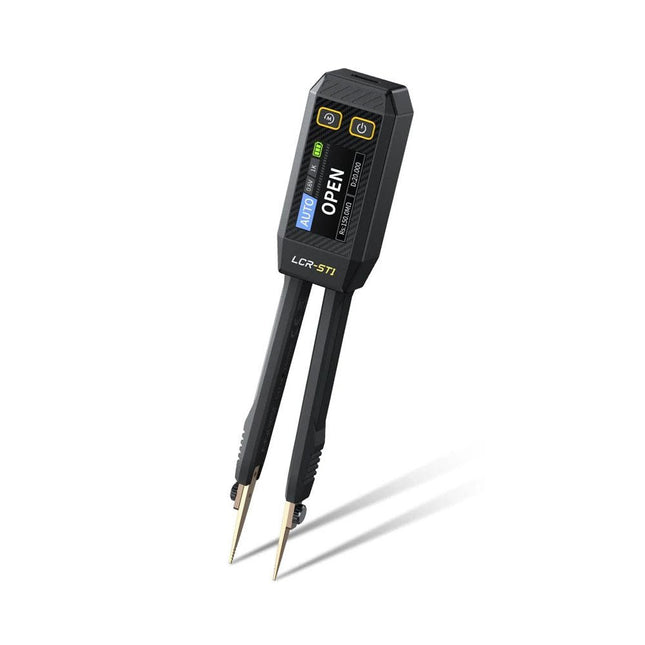
De FNIRSI LCR-ST1 is een compacte, multifunctionele en intelligente LCR-tester die automatische metingen van weerstand, capaciteit, inductantie, diodetests en continuïteit ondersteunt.
Het 1,14-inch kleurendisplay in combinatie met een handige magnetische adsorptiefunctie verbetert het gebruiksgemak, terwijl de ingebouwde lithiumbatterij van 250 mAh langdurige prestaties garandeert. Het apparaat ondersteunt drie frequentiebereiken (100 Hz, 1 kHz en 10 kHz) en biedt 0,3 V en 0,6 V RMS-testniveaus voor veelzijdige testtoepassingen.
Het unieke pincetvormige ontwerp van de LCR-ST1 is ideaal voor delicate taken in kleine ruimtes en maakt het snel en nauwkeurig testen van elektronische componenten mogelijk. Het lichte gewicht en het draagbare ontwerp maken het tot een hulpmiddel van onschatbare waarde voor zowel veld- als laboratoriumgebruik.
Of u nu een ervaren ingenieur bent of net begint in de elektronica, de LCR-ST1 levert betrouwbare en nauwkeurige meetresultaten, waardoor u uw taken efficiënter en nauwkeuriger kunt uitvoeren.
Kenmerken
Biedt 3 testfrequenties (100 Hz, 1 kHz, 10 kHz) en 2 testspanningsniveaus.
Beschikt over automatische componentidentificatie voor snellere en betrouwbaardere metingen.
1,14-inch kleurendisplay met hoge resolutie voor duidelijke aflezingen.
Ondersteunt automatische gegevensregistratie en -opslag.
De pincetpunten zijn gemaakt van verguld messing voor verbeterde duurzaamheid en geleiding.
Specificaties
Weerstandsbereik
10 mΩ – 10 MΩ
Capaciteitsbereik
1 pF – 22 mF
Inductiebereik
1 μu – 10 H
Diode
Aanspanning 0,7 V
Frequentietest
100 Hz, 1 kHz, 10 kHz
Niveautest
0,3 V, 0,6 V RMS
Parameterweergave
ESR, D-waarde, Q-waarde, Z-waarde, X-waarde
Display
1,14" HD-kleurenscherm
Oplaadinterface
USB-C, 5 V/1 A
Voeding
Ingebouwde lithiumbatterij van 250 mAh
Automatische herkenningsmeting
Ja
Vervangbare pincetkop
Ja
Automatische uitschakeling
Ja
Gegevensopslag
Ja
Geschiedenisrecord
Verbinden met pc om te bekijken en exporteren
Afmetingen
28 x 19 x 150 mm
Gewicht
41 g
Inbegrepen
1x LCR-ST1 SMD-pincet
2x Haakpunten
1x Magnetische patch
1x USB-kabel
1x Opbergtas
1x Manual
Downloads
Manual
Firmware V1.6
Program and Build Raspberry Pi 5 Based Ham Station Utilities with the RTL-SDR
The RTL-SDR devices (V3 and V4) have gained popularity among radio amateurs because of their very low cost and rich features. A basic system may consist of a USB based RTL-SDR device (dongle) with a suitable antenna, a Raspberry Pi 5 computer, a USB based external audio input-output adapter, and software installed on the Raspberry Pi 5 computer. With such a modest setup, it is possible to receive signals from around 24 MHz to over 1.7 GHz.
This book is aimed at amateur radio enthusiasts and electronic engineering students, as well as at anyone interested in learning to use the Raspberry Pi 5 to build electronic projects. The book is suitable for both beginners through experienced readers. Some knowledge of the Python programming language is required to understand and eventually modify the projects given in the book. A block diagram, a circuit diagram, and a complete Python program listing is given for each project, alongside a comprehensive description.
The following popular RTL-SDR programs are discussed in detail, aided by step-by-step installation guides for practical use on a Raspberry Pi 5:
SimpleFM
GQRX
SDR++
CubicSDR
RTL-SDR Server
Dump1090
FLDIGI
Quick
RTL_433
aldo
xcwcp
GPredict
TWCLOCK
CQRLOG
klog
Morse2Ascii
PyQSO
Welle.io
Ham Clock
CHIRP
xastir
qsstv
flrig
XyGrib
FreeDV
Qtel (EchoLink)
XDX (DX-Cluster)
WSJT-X
The application of the Python programming language on the latest Raspberry Pi 5 platform precludes the use of the programs in the book from working on older versions of Raspberry Pi computers.