
Zoekresultaten voor "m5stack OR battery OR module OR 850mah"
-

Elecrow Elecrow ThinkNode M5 – Meshtastic LoRa-transceiver (868 MHz)
Hoogwaardig LoRa-communicatieapparaat De Elecrow ThinkNode M5 is een compact, draagbaar LoRa-communicatieapparaat dat is ontworpen voor berichtenverkeer en het delen van locaties buiten het bereik van mobiele netwerken (off-grid) en voor gebruik in de buitenlucht. Het apparaat wordt aangestuurd door een ESP32-S3-processor en een SX1262 LoRa-chip, is voorzien van vooraf geïnstalleerde Meshtastic-firmware en kan eenvoudig via Bluetooth worden geconfigureerd met de officiële Meshtastic-app. De geïntegreerde multi-GNSS-module ondersteunt GPS, GLONASS, BeiDou en QZSS voor betrouwbare positionering en het delen van locaties. Berichten en apparaatgegevens worden weergegeven op het energiezuinige 1,54-inch e-paper-scherm, terwijl de ingebouwde oplaadbare accu van 1.200 mAh zorgt voor langdurig mobiel gebruik. Dankzij de geïntegreerde LoRa-antenne, de compacte behuizing, de RTC en de ondersteuning voor zowel Meshtastic- als MeshCore-firmware is de ThinkNode M5 een praktische communicatieoplossing voor wandelen, kamperen, afgelegen locaties en noodsituaties waarin conventionele mobiele netwerken niet beschikbaar zijn. Kenmerken LoRa-communicatie Multi-GNSS-positionering Oplaadbare accu van 1200 mAh 1,54-inch e-paper-display Ingebouwde RTC Compatibel met MeshCore Compatibel met Meshtastic Specificaties Hoofdprocessor (ESP32-S3) CPU/SoC Xtensa 32-bit LX7 dual-core processor, geklokt op maximaal 240 MHz Systeemgeheugen 512 KB SRAM, 8 MB PSRAM Opslag 4 MB Flash, 384 KB ROM Firmware Volledig compatibel met Meshtastic-firmware; signaaloverdracht via LoRa-modus EPD (Electronic Paper Display) Displaygrootte 1,54-inch EPD (monochroom E-Ink-scherm) Displaymateriaal E-Ink (Electronic Ink) Resolutie 200 x 200 Driver-chip SSD1681 (via SPI- of I²C-interface) Volledige verversingstijd 2 s Draadloze communicatie Bluetooth Bluetooth Low Energy en Bluetooth 5.0 (configuratie via telefoon) LoRa SX1262 LoRa-module, EU 868 MHz (externe antenne) Hardware Interfaces USB-C, RP-SMA Functies GPS-locatie (GPS, GLONASS, BeiDou, QZSS), EPD-scherm, RTC, USB 2.0, PMU-energiebeheer (ingebouwde 1200 mAh-lithiumaccu), zoemer, enz. Knoppen Draaischakelaar, functieknop, paginaknop, GPS-schakelaar, resetknop LED-indicator Voeding, GPS/LoRa-indicatie Overige Voeding 5 V/1 A, ondersteunt voeding via USB of lithiumbatterij Stroomverbruik De maximale bedrijfsstroom bedraagt ongeveer 340 mA (CPU + LoRa-module); het verbruik in de energiezuinige modus bedraagt ongeveer 34 uA Bedrijfstemperatuur -10~50°C Opslagtemperatuur -20~60°C Relatieve luchtvochtigheid 10-95% bij 40°C (niet-condenserend) Behuizing ABS-kunststof Afmetingen 82 x 51,6 x 26,3 mm Gewicht 81 g Inbegrepen 1x Elecrow ThinkNode M5 1x LoRa-antenne 1x USB-C kabel 1x Manual Downloads Manual
€ 74,95
Leden: € 67,46
-
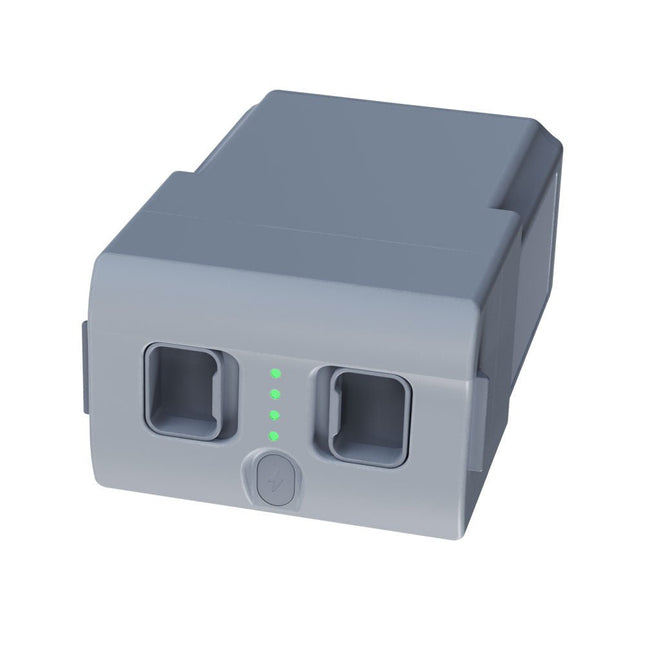
Unitree Unitree Go2 reservebatterij (15.000 mAh)
Met een capaciteit van 15.000 mAh biedt de Unitree Go2-batterij een robuuste stroombron waarmee uw robot taken met gemak kan uitvoeren. Of het nu gaat om complexe verkenningen, onderzoeksprojecten of leuke excursies, deze krachtige batterij levert de energie die uw robot nodig heeft. De looptijd van de Unitree Go2-batterij varieert afhankelijk van de toepassing en het gebruik. Op basis van de gebruikte functies en activiteiten kan de batterij tussen de 2 en 4 uur werken. Dankzij deze flexibiliteit kunt u de robot naar wens aanpassen, waardoor langere verkenningsmissies of uitgebreidere projecten mogelijk zijn. De Unitree Go2-batterij is een betrouwbare metgezel voor uw robotica-avonturen. Met zijn indrukwekkende capaciteit en aanpasbare looptijd zorgt hij ervoor dat uw robot krachtig en uithoudingsvermogen presteert, zonder regelmatig op te laden. Of u de Unitree Go2-batterij nu nodig heeft als vervanging of als upgrade voor uw robot, deze krachtige oplossing voor energieopslag biedt de perfecte balans tussen prestaties en betrouwbaarheid. Specificaties Nominale spanning: DC 28,8 V Beperkte laadspanning: DC 33,6 V Laadstroom: 9 A Nominale capaciteit: 15.000 mAh, 432 Wh Standaard: IS 16046 (deel 2) / IEC 62133-2 Zelf ontwikkeld batterijbeheersysteem (BMS) Afmetingen: 120 x 80 x 182 mm Kenmerken: Aan/uit-indicator Zelfontladingsbeveiliging van batterijopslag Evenwichtsladingsbescherming Bescherming tegen overbelasting Ontladingsbeveiliging Kortsluitbeveiliging Bescherming voor detectie van batterijlading
€ 795,00
Beste prijs
-

Elektor Bundles Physical AI with Raspberry Pi (Bundel)
Deze bundel bevat de AI Fusion Lab Kit met meer dan 450 componenten en het boek Physical AI with Raspberry Pi. Samen bieden ze een uitgebreide, praktijkgerichte introductie tot AI, elektronica en programmeren met Python. Bouw praktische projecten waarin computervisie, spraakinteractie, sensoren, motoren en grote taalmodellen (LLM's) worden gecombineerd. Het bijgeleverde boek begeleidt je stap voor stap: van de installatie van de Raspberry Pi en het aansturen van hardware tot geavanceerde toepassingen met OpenCV, MediaPipe, YOLO, OpenAI-diensten en lokale Ollama-modellen. SunFounder AI Fusion Lab Kit voor Raspberry Pi (450+ onderdelen) De AI Fusion Lab Kit verandert een Raspberry Pi in een compleet platform voor het leren van kunstmatige intelligentie, elektronica en Python-programmeren. De kit ondersteunt de Raspberry Pi 5, 4B, 3B+, 3B en Zero 2 W, evenals populaire AI-modellen en -diensten zoals ChatGPT, Gemini, Grok, DeepSeek, Qwen, Doubao en Ollama. Dankzij de camera, Pan-Tilt HAT, 10-assige sensormodule, microfoon, luidspreker en elektronische componenten kunnen gebruikers interactieve AI-projecten bouwen die spraak, beeldherkenning, beweging en sensordata combineren. De kit is geschikt voor beginners, studenten, makers en iedereen die praktische AI-toepassingen wil verkennen. Bouw multimodale AI-projecten Combineer grote taalmodellen (LLM's) met spraakherkenning, tekst-naar-spraak, camerabeeld, sensoren en breadboard-schakelingen. Creëer projecten die kunnen luisteren, spreken, zien, reageren en interageren met hun omgeving, terwijl je leert hoe moderne AI-systemen werken. Verken AI-beeldherkenning en objectvolging Gebruik YOLO, OpenCV en MediaPipe om objecten, kleuren, gezichten en menselijke bewegingen te detecteren en te volgen. Met de gemotoriseerde Pan-Tilt HAT kan de camera doelen automatisch volgen, wat laat zien hoe computervisie en bewegingsbesturing samenwerken. Spraak-AI met de Fusion HAT+ De Fusion HAT+ vereenvoudigt de aansturing van hardware via een uniforme Python-bibliotheek en ondersteunt het veilig afsluiten van de Raspberry Pi. Dankzij de geïntegreerde microfoon en luidspreker is het eenvoudig om spraakgestuurde assistenten en andere conversatie-AI-toepassingen te ontwikkelen. Compatibel met Raspberry Pi 5, 4B, 3B+, 3B en Zero 2 W Ondersteunt diverse cloud-gebaseerde en lokale AI-modellen Inclusief camera, Pan-Tilt HAT, 10DOF-module, microfoon en luidspreker Projecten op het gebied van spraak-AI, computer vision, sensoren en elektronica Videolessen, documentatie en voorbeeldcode Boek: Physical AI with Raspberry Pi Aan de hand van de Raspberry Pi en de AI Fusion Lab Kit neemt dit boek je stap voor stap mee: van de basisbeginselen van hardware-interfacing tot de ontwikkeling van intelligente systemen die kunnen zien, luisteren, spreken en beslissingen nemen. Of je nu student, docent, maker of professioneel ingenieur bent, je doet waardevolle ervaring op met projecten die zijn ontworpen om zowel je kennis als je zelfvertrouwen te vergroten. Het boek begint met de systeeminstallatie, GPIO-programmering, sensoren, displays, motoren en automatiseringstechnieken, en introduceert gaandeweg geavanceerdere onderwerpen zoals spraakherkenning, tekst-naar-spraak-synthese, conversationele AI, objectherkenning en machine learning. Onderweg leer je hoe je spraakgestuurde apparaten, intelligente assistenten, cameravolgsystemen, oplossingen voor omgevingsmonitoring en AI-gestuurde embedded applicaties kunt bouwen. Verken moderne technologieën zoals OpenAI-diensten, lokale 'large language models' via Ollama, OpenCV, MediaPipe en YOLO-objectdetectie, terwijl je praktische ervaring opdoet met toepassingen uit de praktijk in robotica, industriële automatisering, slimme apparaten en autonome systemen. Je ontdekt hoe intelligente software kan samenwerken met sensoren, camera's, motoren en displays om systemen te creëren die op natuurlijke wijze reageren op hun omgeving. In plaats van alleen maar codevoorbeelden te volgen, word je aangemoedigd om te experimenteren, aanpassingen te doen en elk project uit te breiden. De technieken en vaardigheden die je in dit boek ontwikkelt, vormen een solide basis voor toekomstige innovatie, snelle prototyping, onderzoek en productontwikkeling. Als je klaar bent om verder te kijken dan traditionele elektronica en de toekomst van intelligente embedded systemen wilt verkennen, begeleidt dit boek je bij elke stap. Deze bundel bevat: SunFounder AI Fusion Lab Kit for Raspberry Pi (t.w.v. € 100) Boek: Physical AI with Raspberry Pi (t.w.v. € 45) Niet inbegrepen Raspberry Pi
€ 144,95€ 129,95Beste prijs
-

Elecrow Elecrow AI Starter Kit voor Jetson Orin Nano
Alles-in-één AI-leer- en ontwikkelplatform voor Edge Intelligence Deze op NVIDIA Jetson gebaseerde AI-starterkit is een veelzijdig platform voor leren, ontwikkelen en praktisch experimenteren met Edge AI. De kit is ontworpen voor gebruik met de NVIDIA Jetson Orin Nano en combineert een 11,6-inch IPS-scherm, een 8-megapixel pan-tilt-camera en een AI-systeem voor spraakinteractie. Het pakket bevat 30 functionele modules en 38 zorgvuldig samengestelde Python-cursussen die variëren van beginners- tot gevorderd niveau. De cursusinhoud behandelt de basisbeginselen van Python, sensortechnologie, AI-vision en beeldherkenning. Dankzij stapsgewijze praktijkoefeningen – variërend van basisprogrammering tot praktische toepassingen van computer vision – vormt deze kit een ideaal platform voor studenten, makers, ontwikkelaars en iedereen die zich wil verdiepen in kunstmatige intelligentie en edge computing. Let op: De NVIDIA Jetson Orin Nano is niet inbegrepen. Kenmerken Ontworpen voor de NVIDIA Jetson Orin Nano AI-module voor spraakinteractie 8 MP-camera met pan-tilt-besturing Ondersteunt object- en gezichtstracking Geen solderen of complexe bedrading nodig Ingebouwd 11,6-inch IPS-scherm 30 functionele modules 38 stapsgewijze Python-lessen Uitbreidingsinterfaces voor I²C, UART en GPIO Inclusief draagtas Specificaties Hoofdprocessor Jetson Orin Nano Aantal sensoren 30 Ontwerp sensorbord Geïntegreerd sensorbord; solderen of complexe bedrading niet nodig Scherm 11,6-inch IPS-scherm Schermresolutie 1366 x 768 Camera IMX219 8MP Uitbreidingsinterfaces 2x I²C, 1x UART, 1x IO D13, 1x IO D12 Programmeeromgeving Gebaseerd op Python Aantal tutorials 38 creatieve tutorials Doelgroep Studenten, docenten, hardware-enthousiastelingen Toepassingen Ideaal voor het leren programmeren van AI en de basisbeginselen van de Jetson Orin Nano Afmetingen 300 x 200 x 100 mm Modulelijst Module Aantal Temperatuur- en vochtigheidssensor 1 st. Drukknop 4 st. Ultrasone afstandssensor 1 st. Lichtsensor 1 st. Lineaire potentiometer 1 st. Zoemer 1 st. LCD-scherm 1 st. Infraroodafstandsbediening 1 st. Relais 1 st. NFC-module 1 st. PIR-bewegingssensor 1 st. Joystick 1 st. 4-cijferig display 1 st. LED 1 st. Microfoon 1 st. Luidspreker 1 paar Trilmotor 1 st. Aanraaksensor 1 st. 8x8 RGB-matrix 1 st. Luchtdruksensor 1 st. Kantelschakelaar 1 st. Stappenmotor 1 st. Versnellingsmeter & gyroscoop 1 st. Gassensor (MQ2) 1 st. Hallsensor 1 st. Draai-encoder 1 st. U-vormige optische schakelaar 1 st. NTC-sensor 1 st. Servomotor 2 st. Monoculaire camera 1 st. Inbegrepen 1x Elecrow AI Starter Kit voor Jetson Orin Nano 1x Infraroodafstandsbediening 1x NFC-kaart 1x 128 GB SD-kaart 1x 40-pins GPIO-kabel 2x 22-pins FPC-kabel 2x 24-pins FPC-kabel 1x Jetson DP- & USB-adapterbord Niet inbegrepen NVIDIA Jetson Orin Nano Downloads Manual Wiki OpenClaw Install and Config Guide
€ 249,00
Leden: € 224,10
-
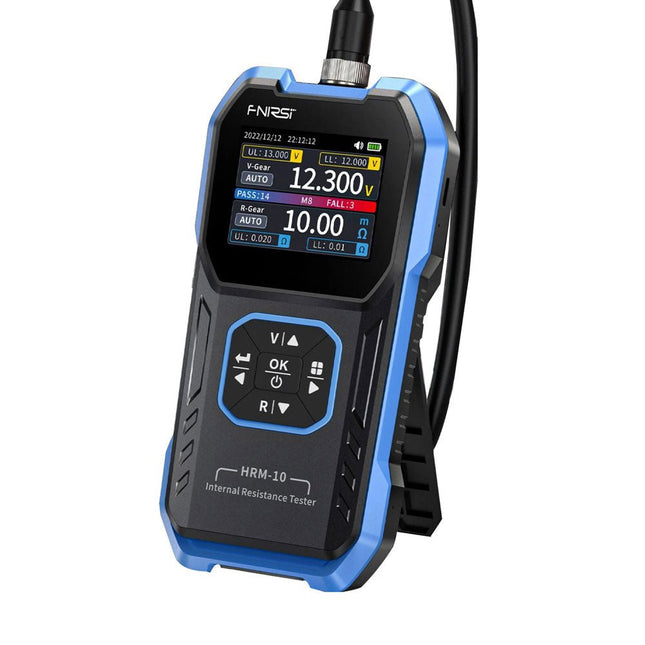
FNIRSI FNIRSI HRM-10 Interne weerstands- en spanningstester voor batterijen
De FNIRSI HRM-10 is een draagbare, zeer nauwkeurige interne weerstands- en spanningstester voor batterijen. Dit apparaat biedt echte vierdraadsmetingen en is ontworpen voor zowel nauwkeurigheid als gebruiksgemak. Het meet automatisch tegelijkertijd de interne weerstands- en spanningswaarden en geeft de resultaten op het HD-kleurenscherm weer. Gebruikers hebben de mogelijkheid om het spannings- en weerstandsbereik handmatig aan te passen aan hun behoeften. Het apparaat bevat ook een sorteermodus die automatisch de goede en slechte batterijen filtert op basis van door de gebruiker ingestelde drempels. Bovendien ondersteunt het de opslag van historische gegevens en is het mogelijk meetgegevens in tabelformaat te exporteren. Kenmerken Hoge meetnauwkeurigheid Tabelgegevens exporteren Meetresultaten automatisch evalueren 8 drempelinstellingen HD-kleurenscherm Opvouwbare standaard 1000 mAh lithiumbatterij Specificaties Spanning Weerstand Meetbereik 0-100 V (DC) 0-200 Ω Nauwkeurigheid ±0,5% ±0,5% Uitrusting Automatisch, 1 V, 10 V, 100 V Automatisch, 20 mΩ, 200 mΩ, 2 Ω, 20 Ω, 200 Ω Instrumenttestsignaalfrequentie 1 Khz (AC) Oplaadbaar USB-C (5 V/1 A) Ingebouwde batterij 1000 mAh lithiumbatterij Gebruikerskalibratie Ja Sorteermodus Ja Geschiedenisrecord Ja Export van opgenomen gegevens Ja Werkomgeving –10°C tot +45°C, relatieve vochtigheid <80% Opslagomgeving –20°C tot +80°C, relatieve vochtigheid <80% Afmetingen 158,7 x 80,5 x 28,4 mm Gewicht 225 g Inbegrepen 1x FNIRSI HRM-10 interne weerstandstester 1x Clip-testlijn 1x USB-C datakabel 1x Manual Downloads Manual Firmware V0.3
€ 49,95
-

JOY-iT Joy-Pi Advanced Ontwikkelplatform (incl. Raspberry Pi 4, 8 GB)
De Joy-Pi Advanced is een compact en krachtig instrument waarmee je snel en eenvoudig je projecten kunt realiseren. Of je nu veel of weinig ervaring hebt, met de Joy-Pi Advanced kun je je creativiteit de vrije loop laten. Dankzij de compatibiliteit met een groot aantal platformen, waaronder Raspberry Pi, Raspberry Pi Pico, Arduino Nano, BBC micro:bit en NodeMCU ESP32, kun je eenvoudig en snel toegang krijgen tot het platform van je voorkeur. Daarnaast heeft de Joy-Pi Advanced meer dan 30 stations, lessen en modules, waardoor je een onbeperkt aantal manieren hebt om je projecten uit te voeren. Met het zelfontwikkelde leercentrum kun je niet alleen je vaardigheden verbeteren, maar ook nieuwe projecten maken. Het leercentrum biedt een schat aan informatie en tutorials die je stap voor stap door je projecten begeleiden. Joy-Pi Advanced wordt in het bijzonder gekenmerkt door zijn intelligente schakeleenheden, die een uitgebreid gebruik van de beschikbare pinnen mogelijk maken. In totaal zijn er drie schakeleenheden geïntegreerd, elk voorzien van 12 individuele schakelaars die zorgen voor een nauwkeurige aansturing van de aangesloten sensoren en modules. Dit systeem lost het bekende probleem van het beperkte aantal pinnen op dat optreedt bij conventionele microcontrollers. Met de schakeleenheden kun je een groot aantal sensoren en modules parallel aansturen door ze afzonderlijk aan en uit te schakelen. Dit simuleert meervoudige pintoewijzing, waardoor je het volledige vermogen van je projecten kunt benutten zonder afbreuk te doen aan de functionaliteit. Door onze innovatieve adapter boards en het micro:bit slot te combineren, bereiken we naadloze compatibiliteit met een breed scala aan microcontrollers zoals Raspberry Pi Pico, NodeMCU ESP32, micro:mit en Arduino Nano. De speciaal ontwikkelde adapterkaarten zijn zo ontworpen dat ze perfect passen bij de betreffende microcontroller. Door de microcontroller op het juiste adapterboard aan te sluiten en deze vervolgens in het micro:bit slot te steken, wordt de Joy-Pi Advanced snel en eenvoudig compatibel met de verschillende microcontrollers. Dit zorgt voor een naadloze integratie van het platform van je voorkeur en de mogelijkheid om de sterke punten van de verschillende microcontrollers te combineren in je projecten. Op deze manier kun je je volledig richten op je creatieve projecten zonder dat je je zorgen hoeft te maken over de compatibiliteit van verschillende microcontrollers. De Joy-Pi Advanced vereenvoudigt het ontwikkelproces en geeft je de mogelijkheid om je projecten flexibel en individueel te ontwerpen. Kenmerken Sterk geïntegreerd ontwikkelplatform & leercentrum Snel, eenvoudig & draadloos combineren van verschillende sensoren & actuatoren Installatieoptie voor Raspberry Pi 4 Compatibel met verschillende microcontrollers Zelfontwikkeld, didactisch leerplatform voor Raspberry Pi & Windows Specificaties Compatibel met Raspberry Pi 4, Arduino Nano, NodeMCU ESP32, BBC micro:bit, Raspberry Pi Pico Geïnstalleerde sensoren, actuatoren & componenten 39 Leerplatform Meer dan 40 items in de kennisdatabase, 10 projecten, 10 lessen, 14 visies Displays 7-segment display, 16x2 display, 1,8' TFT-display, 0,96" OLED-display, 8x8 RGB-matrix Sensoren DS18B20, schoksensor, hallsensor, barometer, geluidssensor, gyroscoop, PIR-sensor, Lichtbarrière, NTC, Lichtsensor, 6x aanraaksensor, kleurensensor, ultrasone afstandssensor, DHT11 temperatuur- & vochtigheidssensor Controle Joystick, 5x schakelaars, potentiometer, draaiencoder, 4x4 knoppenmatrix, relais, PWM-ventilator Motoren Servo-interface, Stappenmotorinterface, Trilmotor Meet- en conversiemodules Analoog-digitaalomzetter, niveauomzetter, voltmeter, variabele spanningsbron Andere onderdelen RTC real-time klok, zoemer, EEPROM-geheugen, infrarood ontvanger, breadboard, RFID-lezer Adapterkaarten Adapter voor NodeMCU ESP32, Arduino Nano & Raspberry Pi Pico, Board connectors voor Raspberry Pi & externe boards Elektronische onderdelen Infrarood afstandsbediening, RFID-chip, RFID-kaart, 6x krokodillenklemmen, microSD-kaartlezer, servomotor, stappenmotor, 32 GB microSD-kaart Onderdelen 40x weerstanden, 3x groene LED's, 3x gele LED's, 3x rode LED's, 1x transistor, 5x knoppen, 1x potentiometer, 2x condensatoren Andere accessoires Schroevenassortiment, schroevendraaier, accessoire-opbergtas, voeding & voedingskabel, servo bevestiging Stroomvoorziening Ingebouwde voeding: 36 W, 12 V, 3 A Behuizingsconnector: Kleine apparaat stekker C8 Spanningsuitgangen 12 V, 5 V, 3,3 V, variabele spanningsuitgang (2-11 V) Databussen & signaaluitgangen I²C, SPI, Analoog naar digitaal converter Batterij (RTC) CR2032 Afmetingen 327 x 200 x 52 mm Inbegrepen Raspberry Pi 4 (8 GB RAM) Downloads Joy-Pi website Datasheet Manual
€ 529,00€ 469,00Beste prijs
-

FNIRSI FNIRSI SWM-20 Dubbelpuls-puntlasapparaat
De FNIRSI SWM-20 handlasmachine is een zeer efficiënt, gebruiksvriendelijk en gemakkelijk mee te nemen lasapparaat. Hij is voorzien van dual-pulse puntlastechnologie, wat zorgt voor stabielere en betrouwbaardere lassen, en beschikt bovendien over een handige powerbankfunctie. Uitgerust met een 2,4-inch HD-display biedt de SWM-20 een duidelijke en intuïtieve bediening. Met de draaiknop kunnen gebruikers parameters snel en nauwkeurig aanpassen, waardoor het eenvoudig is om de gewenste lasinstellingen te kiezen en de algehele gebruikerservaring te verbeteren. Kenmerken 2-in-1: Puntlasapparaat en 5000 mAh powerbank 1200 A hoog vermogen voor sterke, betrouwbare lassen Dual-Pulse technologie voor schoner en stabieler lassen Twee A-klasse accu's met 8 veiligheidsfuncties Lasmogelijkheid voor meerdere materialen van 0,1–0,5 mm Meer dan 10.000 precisie-instelniveaus voor professionele controle 2,4-inch TFT-display met realtime gegevensbewaking Specificaties Maximale lasstroom 1200 A Batterijcapaciteit 5000 mAh Opladen 5 V/2,1 A Ontladen 5 V/2,1 A Lasmaterialen Nikkel, ijzer, roestvrij staal Lasdikte 0,1-0,5 mm Niveau 4 vooraf ingestelde combinaties Niveaus Inbegrepen 1x FNIRSI SWM-20 puntlasapparaat 2x Laspennen 2x Vervangingstips 1x Nikkelstrip 1x USB-C kabel 1x Manual Downloads Manual
€ 79,95€ 67,95Beste prijs
-
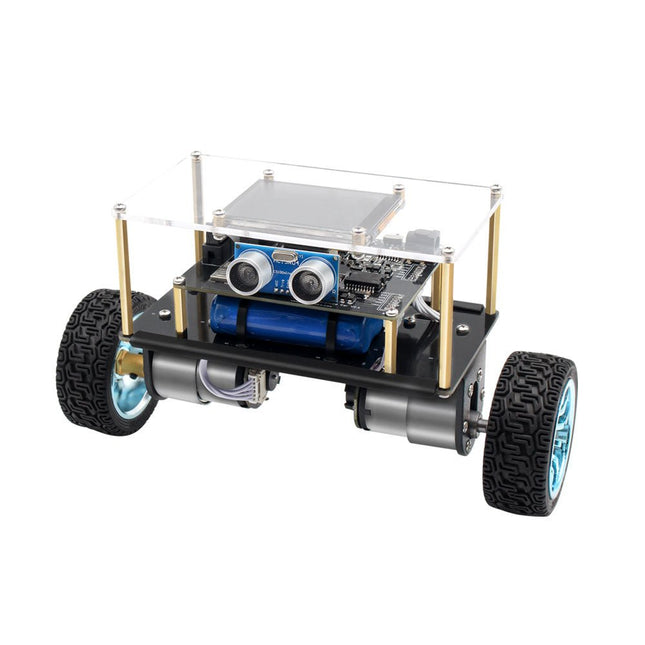
Elektor Labs Elektor Mini-Wheelie zelfbalancerende Robot
Arduino-compatibele, ESP32-aangedreven tweewielige balansrobot De Elektor Mini-Wheelie is een experimenteel autonoom zelfbalancerend robotplatform. De zelfbalancerende robot is gebaseerd op een ESP32-S3-microcontroller en is volledig programmeerbaar met behulp van de Arduino-omgeving en open-sourcebibliotheken. Dankzij de draadloze mogelijkheden kan hij op afstand worden bediend via Wi-Fi, Bluetooth of ESP-NOW, of kan hij communiceren met een gebruiker of zelfs een andere robot. Er is een ultrasone transducer beschikbaar voor het detecteren van obstakels. Het kleurendisplay kan worden gebruikt voor het weergeven van schattige gezichtsuitdrukkingen of, voor de meer nuchtere gebruikers, voor cryptische debug-berichten. De robot wordt geleverd als een compleet bouwpakket met onderdelen die u zelf in elkaar moet zetten. Alles zit erbij, zelfs een schroevendraaier. Let op: De Mini-Wheelie is een educatief ontwikkelingsplatform bedoeld voor leren, experimenteren en robotica-ontwikkeling. Het is niet geclassificeerd als speelgoed voor kinderen en de functies, documentatie en beoogde doelgroep weerspiegelen dit doel. Het product is gericht op studenten, docenten en ontwikkelaars die robotica, programmeren en hardware-integratie willen verkennen in een educatieve omgeving. Specificaties ESP32-S3-microcontroller met Wi-Fi en Bluetooth MPU6050 6-assige Inertial Measurement Unit (IMU) Twee onafhankelijk geregelde 12 V elektromotoren met toerenteller Ultrasone transducer 2,9" TFT-kleurendisplay (320 x 240) MicroSD-kaartsleuf Batterijstroommonitor 3S oplaadbare Li-Po-batterij (11,1 V/2200 mAh) Batterijlader meegeleverd Op Arduino gebaseerde open source-software Afmetingen (B x L x H): 23 x 8 x 13 cm Inbegrepen 1x ESP32-S3 Mainboard + MPU6050 module 1x LCD-board (2,9 inch) 1x Ultrasone-sensor 1x Batterijpakket (2200 mAh) 1x Batterijlader 1x Motorbandenset 1x Kastboard 1x Acrylplaat 1x Schroevendraaier 1x Beschermstrip 1x Flexkabel B (8 cm) 1x Flexkabel A (12 cm) 1x Flexkabel C 4x Koperen kolom A (25 mm) 4x Koperen kolom B (55 mm) 4x Koperen kolom C (5 mm) 2x Kunststof nylon zuil 8x Schroeven A (10 mm) 24x Schroeven B (M3x5) 8x Moeren 24x Metalen ringen 2x Ritssluiting 1x MicroSD-kaart (32 GB) Downloads Documentation
€ 99,95€ 79,95Beste prijs
-

Elektor Digital Elektor Special: Stromversorgung & Batterien (PDF)
Der simpel „Stromversorgung“ genannte Schaltungsteil wird sowohl bei der Entwicklung als auch bei der Reparatur von Elektronik enorm unterschätzt. Dabei ist die Vielfalt bei Netzteilen oder neudeutsch „PSU“ enorm. Es gibt sie in den unterschiedlichsten Ausführungen: mit Gleich- oder Wechselspannung, als Generator, Akku oder Batterie, als Solar-Panel, extern oder eingebaut, linear oder „geschaltet“ – um nur einige zu nennen. Auch die Leistungsbereiche sind enorm: von Nano-Ampere bis Kilo-Ampere – dasselbe gilt für Spannungen. Bei der konkreten Umsetzung kann man zwischen ICs oder diskreten Bauteilen, zwischen fertigem Gerät bzw. Modul oder der Realisation aus selbstverlöteten Bauteilen wählen. Dieses Special deckt die wichtigsten Merkmale und Gestaltungsaspekte von Stromversorgungen ab. Inhalt Grundlagen BatteriemanagementWas man beim Einsatz von (Lithium-)Akkus beachten muss. Festspannungsnetzgerät mit LinearreglerDas beste Ergebnis gleich nach den Batterien. Lichtenergie sammelnWie man ein Solarmodul für ein Energy-Harvesting-Projekt verwenden kann. Netzbetriebene VersorgungsgeräteBasis-schaltungen und Tipps für Transformatoren, Gleichrichtung, Siebung und Stabilisierung. SanftanlaufDer hohe Einschaltstrompuls sollte vermieden werden. Steuerbare GleichrichterEinige Vorschläge um die Verlustleistung im Längsregler möglichst gering zu halten. Komponenten Arbeitsblatt: Spannungsreglerserie LM117 / LM217 / LM317 Supercaps Reviews Labornetzteil-Kit Joy-iT RD6006 Elektronische Last Siglent SDL1020X-E Projekte Balkon-KraftwerkSelbst installiert = schnell amortisiert! DIY-LiPo-Supercharger-KitVom Prototyp zum Massenmarkt. Doppelanoden-MOSFET-ThyristorSchneller und effizienter als herkömmliche SCRs. Batterie-EntsafterNicht wegwerfen, ausquetschen! Hochspannungsnetzteil mit KennlinienschreiberSpannungen bis 400 V einstellen und Kennlinien für Röhren und Transistoren erstellen. HochspannungsnetzteilFür RIAA-Röhrenvorverstärker und andere Anwendungen. MicroSupplyEine Laborstromversorgung für universelle Anwendungen. Phantom-Speisung mit geschalteten KondensatorenSpannungsverdreifachung mit zwei ICs. Das SMPS800RE Schaltnetzteil für den Elektor Fortissimo-100Zuverlässig, leicht und erschwinglich. SoftstartSchont das Netzgerät und die Last. UniLab 2Geschaltetes Labornetzteil 0…30 V/3 A Tipps Softstart für Step-Down-Schaltregler Stromabschaltung mit minimalen Verlusten Powerbank-Geheimnisse Künstliche Masse Akku-Erfrischer Akkupack-Entlader Parallelschaltung von Spannungsreglern
€ 11,90
Leden: € 10,71
-

Elektor Bundles Build Smart Projects with the XIAO ESP32-C3 Board (Bundel)
Deze bundel bevat alles wat u nodig hebt om direct aan de slag te gaan met het XIAO ESP32-C3 development board. Leer de basisprincipes van de ESP32-C3 en bouw praktische projecten met Wi-Fi, Bluetooth, sensoren, displays, PWM, Deep Sleep en nog veel meer. Boek: Build Smart Projects with the XIAO ESP32-C3 Board Het XIAO ESP32-C3 board combineert de ultracompacte vormfactor van de XIAO-serie met de uitgebreide mogelijkheden van de ESP32-C3-chip, inclusief geïntegreerde Wi-Fi en Bluetooth 5.0. Dit boek is een uitgebreide, praktische gids waarmee u het maximale uit dit krachtige en toch betaalbare development board kunt halen. De auteur neemt de lezer mee van de basisprincipes tot geavanceerde projecten. Na het laten knipperen en dimmen van leds komen ADC en PWM aan bod voor nauwkeurige sensoraansluiting en PWM-gestuurde lichteffecten. Vervolgens gaat u aan de slag met praktische toepassingen, waaronder: Een Wi-Fi-weerstation met OLED-display en actuele online weergegevens Een ultrasone parkeerassistent met akoestische feedback Een koelkastmonitor met klimaatsensoren en Deep Sleep voor jarenlang batterijgebruik Een retro Pong-spel dat contactloos met een sensor wordt bestuurd Een microfoongebaseerde party-app die reageert op handgeklap En nog veel meer: lichtregeling, reactietijdmeting, analyse van de netfrequentie, bodemvochtmeting, sfeerverlichting met leds en 7-segmentdisplays Seeed Studio XIAO ESP32C3 De Seeed Studio XIAO ESP32C3 is uitgerust met een sterk geïntegreerde ESP32-C3-chip, gebaseerd op een 32-bits RISC-V-processor met een viertraps pipeline die werkt met een kloksnelheid tot 160 MHz. Het board beschikt over een sterk geïntegreerde ESP32-C3 SoC. De chip bevat een volledig 2,4-GHz Wi-Fi-subsysteem en ondersteunt daarmee Station-modus, SoftAP-modus, SoftAP & Station-modus en promiscuous-modus voor uiteenlopende Wi-Fi-toepassingen. Tegelijkertijd werkt de chip met een zeer laag energieverbruik en ondersteunt hij Bluetooth 5 en Bluetooth Mesh. Met 400 KB SRAM en 4 MB Flash biedt de chip voldoende programmeerruimte en volop mogelijkheden voor IoT-besturingstoepassingen. Toepassingen Internet of Things Wearables Gezondheidsmonitoring Onderwijs Energiezuinige netwerken Snelle prototyping Specificaties Processor ESP32-C3 SoC RISC-V single-core 32-bit chip processor with a four-stage pipeline that operates at up to 160 MHz Wireless Complete 2.4GHz Wi-Fi subsystem Bluetooth Low Energy 5.0/ Bluetooth Mesh On-chip Memory 400 KB SRAM & 4 MB Flash Interface 1x UART, 1x I²C, 1x SPI, 11x GPIO (PWM), 4x ADC 1x Reset button, 1x Boot button Power (Typ.) Max 3.3 V Output Current: 500 mA Test Condition: BAT Pin Input @ 3.8 V Source Capability: 3 A Charging current: 380 mA(Fast) / 40 mA(Trickle) Input voltage (VIN): 5 VInput voltage (BAT): 3.7 V Deep Sleep Power Consumption Deep Sleep Mode: 44 μA Wi-Fi Enabled Power Consumption Active Mode: 75 mA Modem-sleep Mode: 25 mA Light-sleep Mode: 4 mA BLE Enabled Power Consumption Modem-sleep Mode: 27 mA Light-sleep Mode: 10 mA Dimensions 21 x 17.8 mm Inbegrepen 1x Seeed Studio XIAO ESP32C3 1x Antenne 2x 7-pins header Downloads Wiki Datasheet Deze bundel bevat: Boek: Build Smart Projects with the XIAO ESP32-C3 Board (t.w.v. € 35) Board: Seeed Studio XIAO ESP32C3 (t.w.v. € 10)
€ 44,95€ 39,95Beste prijs


-

, van Clemens Valens Fnirsi HRM-10 Interne Weerstandstester voor batterijen, een review
Nu in toenemende mate alles op batterijen werkt, neemt de behoefte aan een tool om batterijen te testen en te repareren toe. Ik besprak al...
-

, van Clemens Valens Fnirsi SWM-10 - Accupacks repareren met deze intelligente draagbare puntlasser (review)
Iedereen die ooit heeft geprobeerd een draad of metalen strip aan een accu te solderen, weet dat dit bijna onmogelijk is. Wat je echt nodig...

