Jan Didden schiep Linear Audio in 2010 en publiceerde 14 delen tussen 2010 en 2017. Elk deel van 200 bladzijden bevat gemiddeld 10 artikelen van deskundige auteurs op het gebied van audio, akoestiek, en instrumentatie. Of je nu geïnteresseerd bent in buizenversterkers, solid-state apparatuur, luidsprekerontwerp, condensator- en weerstandsvervorming of vervormingsmeting, je vindt er zeker nuttige adviezen en interessante discussies. Van beginner tot gevorderd niveau, voor de audio professional of de serieuze hobbyist, deze ExpertCollection zal je kennis vergroten en nieuwe perspectieven bieden op veel voorkomende problemen. Bonusmateriaal bij deze collectie is een 5-delige YouTube serie over negatieve feedback toegepast op audio van de bekende auteur Jan Didden, en nog negen andere baanbrekende audio artikelen en presentaties. Als je serieus geïnteresseerd bent in audio, akoestiek, en instrumentatie, mag je dit niet missen! Het gepubliceerde materiaal is geïndexeerd en volledig doorzoekbaar en zal een bijna onbeperkte bron zijn voor vele jaren. Je kunt over de auteurs van Linear Audio lezen, en de inhoudsopgave van elk deel, zie linearaudio.net.
Een greep uit de inhoud
Surround-sound-decoder
Compact amp
Sampling rate converter
Accugevoede voorversterker
Eindversterker Titan 2000
Crescendo Millennium versterker
Audio-DAC/ADC
IR-S/PDID-zender/ontvanger
The Audio Drive (versterker)
Draadloze hifi-hoofdtelefoon
Paraphase-toonregeling en meer…
Met Adobe Reader kunt u alle artikelen, schema’s en printlay-outs openen en doorzoeken.
Zelfbouw versterkers en luidsprekers
Deze speciale uitgave staat vol met interessante bouwbeschrijvingen en achtergrondartikelen van internationaal gerenommeerde ontwerpers. Het gaat in alle gevallen om nieuwe, nog niet eerder gepubliceerde artikelen.
Inhoudsopgave
Buizenversterkers
30 Watt buizenversterker met variabele dempingsfactor
50 Watt super triode versterker
300 Watt buizen eindversterker
Digibias: digitaal de ruststroom instellen en bewaken
Luidsprekers
Paper Hatt - klein maar fijn
Origami M en C – compacte actieve subwoofer in twee smaken
Meerweg open baffle systemen – basistheorie, ontwerp en meetmethode
Moai – hightech uit Scandinavië
OB3W – drieweg open-baffle dipool van formaat
1685a – compacte tweeweg vloerstaander
ScanSpeak Vertigo – duizelingwekkend mooi driewegsysteem
Halfgeleiderversterkers
MinimA – minimalistische 120W klasse-B versterker
Gebalanceerde voorversterker met actief wisselfilter
RelaiXed – gebalanceerde voorversterker met relais
De QA403 is de vierde generatie audio analyzer van QuantAsylum. Deze QA403 verhoogt de functionaliteit van de QA402 met verbeterde ruis- en vervormingsprestaties, en ook een vlakkere respons aan de randen van de band. Het compacte formaat van de QA403 zorgt ervoor dat u hem vrijwel overal mee naartoe kunt nemen.
Kenmerken
24-bits ADC/DAC
Tot 192 kS/s
Volledig geïsoleerd van de PC
Differentiële input/output
USB gevoed
Ingebouwde demping
Snel opstarten en geen stuurprogramma
De QA403 is een USB-apparaat zonder stuurprogramma's, wat betekent dat hij meteen operationeel is zodra u hem aansluit. De software is gratis, en u kunt snel en gemakkelijk de hardware van de ene machine naar de andere verplaatsen. Dus als u naar een vestiging moet om een probleem op te lossen, of de QA403 mee naar huis dient te nemen op een thuiswerkdag, dan kunt u dit zonder veel gedoe doen.
No-Cal ontwerp
De QA403 wordt geleverd met een fabriekskalibratie in het flashgeheugen, waardoor consistente prestaties bij gebruik van meerdere analyzers kan worden gegarandeerd. Op uw productielijn kunt u een andere QA403 installeren en erop vertrouwen dat wat u op de ene analyzer leest overeenkomt met de andere. Er hoeft dus niet geregeld herkalibratie plaats te vinden.
Metingen
Het uitvoeren van basismetingen kan snel en eenvoudig. In een paar klikken krijgt u inzicht in de frequentierespons, de THD (+ N), de versterking, de SNR, en andere gegevens van uw geteste apparaat.
Dynamisch bereik
De QA403 biedt 8 gradaties aan versterking op de ingang (0 tot +42 dBV in 6 stappen) en 4 stappen versterking op de uitgang (-12 tot +18 dBV in stappen van 10 dB). Dit zorgt voor consistente prestaties over zeer brede in- en uitgangsniveaus. De maximale AC ingangsspanning op de QA403 is +32 dBV = 40 Vrms. De maximale DC is ±40 V en de maximale ACPEAK + DC = ±56 V.
Eenvoudig te programmeren
De QA403 ondersteunt een REST-interface, waardoor het eenvoudig is om metingen te automatiseren in vrijwel elke taal. Van Python tot C++ tot Visual Basic: als u weet hoe u een webpagina in uw favoriete taal moet laden dan kunt u al de QA403 op afstand bedienen. Metingen zijn snel en responsief, doorgaans met het verwerken van tientallen opdrachten per seconde.
Geïsoleerd, en gevoed via USB
De QA403 werkt geïsoleerd van de pc, wat betekent dat u echt uw te testen apparaat meet, en niet met een fantoom aardlus te doen heeft. De QA403 wordt gevoed via USB, zoals bijna alle QuantAsylum instrumenten. Indien u op afstand moet configureren, neem dan een hub met voeding mee in uw tas en uw hele testopstelling kan dan functioneren met een minimum aan kabels.
Vaarwel geluidskaart, hallo QA403
Moe van het proberen om een geluidskaart aan de praat te krijgen? Nachtmerries van het kalibreren? Gemis van de juiste versterking? Of te weinig aansturing? Bent u het zat om met vaste ingangsranges om te gaan? Of bang dat u zaken kapot maakt met te veel DC of AC? Moe van de aardlussen? Dáarom heeft QuantAsylum de QA403 ontworpen.
Specificaties
Afmetingen
177 x 44 x 97 mm (B x H x D)
Gewicht
435 g
Case Materiaal
Aluminium met poedercoating (2 mm dik voorpaneel, 1.6 mm dikke boven/onderkant)
Downloads
Datasheet
Manual
GitHub
Zelfbouw versterkers en luidsprekers
Ook deze vijfde Audio Special staat weer vol met interessante bouwbeschrijvingen en achtergrondartikelen van internationaal gerenommeerde ontwerpers. Ook dit jaar weer de inmiddels bekende mix van buizenversterkers en luidsprekers, zodat er voor iedere zelfbouwer ongetwijfeld iets interessants te lezen of te bouwen valt. Het gaat in alle gevallen om nieuwe, nog niet eerder gepubliceerde artikelen.
Inhoud
Versterkers
Classic Three voorversterker
Lijnvoorversterker met 6C33
De Dirigent – buizenvoorversterker met actief scheidingsfilter
Single ended KR300B stereo eindversterker
1 Watt gitaarversterker – voor huiskamer
Single ended 211 triode versterker – met interstage trafo
Dieper kijken in de uitgangstransformator
Prelude voorversterker – minimalisme in optima forma
Klik aan, klik uit schakelaar – een netschakelaar met legio toepassingen
Luidsprekers
Scheidingsfilters voor luidsprekerboxen – meer valkuilen dan je lief is
Morel Elite 420 – actieve tweeweg boekenplank luidspreker
All back – een verrassend veelzijdige compacte TL
HATT-SE MkII Micro Monitor – kleine luidspreker met pit
Silverado – een d’Appolito met pit
Nebular Monitor – een compacte luidspreker met een groots geluid
LBVS – zelfbouwklassieker van eigen bodem
Solo 201 – er is maar één weg!
The State of Hollow State Audio in the Second Decade of the 21st Century
Vacuum-tube (or valve, depending upon which side of the pond you live on) technology spawned the Age of Electronics early in the 20th Century. Until the advent of solid-state electronics near mid-century, hollow-state devices were the only choice. But following the invention of the transistor (after their process fell to reasonable levels), within a couple of decades, the death of vacuum tubes was widely heralded. Yet here we are some five decades later, and hollow-state equipment is enjoying something of a comeback, especially in the music and high-end audio industries.
Many issues surround hollow-state audio:
Does it produce—as some claim—better sound? If so, is there science to back up these claims?
How do hollow-state circuits work?
How do you design hollow-state audio circuits?
If hollow-state equipment fails, how do you go about troubleshooting and repairing it?
Can we recreate some of the classic hollow-state audio devices for modern listening rooms and recording studios?
How can we intelligently modify hollow-state amplifiers to our taste?
These and other topics are covered in The State of Hollow State Audio.
Easy and Affordable Digital Signal ProcessingThe aim of this book is to teach the basic principles of Digital Signal Processing (DSP) and to introduce it from a practical point of view using the bare minimum of mathematics. Only the basic level of discrete-time systems theory is given, sufficient to implement DSP applications in real time. The practical implementations are described in real time using the highly popular ESP32 DevKitC microcontroller development board. With the low cost and extremely popular ESP32 microcontroller, you should be able to design elementary DSP projects with sampling frequencies within the audio range. All programming is done using the popular Arduino IDE in conjunction with the C language compiler.After laying a solid foundation of DSP theory and pertinent discussions on the main DSP software tools on the market, the book presents the following audio-based sound and DSP projects:
Using an I²S-based digital microphone to capture audio sound
Using an I²S-based class-D audio amplifier and speaker
Playing MP3 music stored on an SD card through an I²S-based amplifier and speaker
Playing MP3 music files stored in ESP32 flash memory through an I²S-based amplifier and speaker
Mono and stereo Internet radio with I²S-based amplifiers and speakers
Text-to-speech output with an I²S-based amplifier and speaker
Using the volume control in I²S-based amplifier and speaker systems
A speaking event counter with an I²S-based amplifier and speaker
An adjustable sinewave generator with I²S-based amplifier and speaker
Using the Pmod I²S2 24-bit fast ADC/DAC module
Digital low-pass and band-pass real-time FIR filter design with external and internal A/D and D/A conversion
Digital low-pass and band-pass real-time IIR filter design with external and internal A/D and D/A conversion
Fast Fourier Transforms (FFT)
Je zou Pirate Audio Headphone Amp kunnen gebruiken om een nette, zakformaat speler te bouwen voor lokale audiobestanden (MP3, FLAC, etc) of voor het streamen van muziek van online diensten zoals Spotify. Om je op weg te helpen heeft Pimoroni plugins gebouwd voor Mopidy waarmee je prachtige album art kunt weergeven, je tracks kunt afspelen/pauzeren en het volume kunt regelen. De DAC en hoofdtelefoonversterker geven je heldere digitaal versterkte audio via je hoofdtelefoon met kabel. Pirate Audio is een reeks van alles-in-een audio boards voor Raspberry Pi, met hoge kwaliteit digitale audio, prachtig heldere IPS displays voor album art, tactiele knoppen voor playback controle, en een aangepaste Pirate Audio software en installer om het opzetten van dit allemaal een fluitje van een cent te maken.Functies
Versterkte digitale audio (24-bit / 192KHz) over I2S
PAM8908 hoofdtelefoonversterker chip
Low-gain / high-gain schakelaar (high-gain verhoogt met 12dB)
PCM5100A DAC-chip
3.5mm stereo aansluiting
1,3' IPS-kleurenscherm (240x240px) (ST7789 driver)
Vier tactiele knoppen
Mini HAT-formaat bord
Volledig gemonteerd
Compatibel met alle 40-pin header Raspberry Pi modellen
Afmetingen: 65x30.5x9.5mm
SoftwareDe Pirate Audio software en installer installeert de Python bibliotheek voor de LCD, configureert de I2S audio en SPI, en installeert vervolgens Mopidy en de aangepaste Pirate Audio plugins om album art en track info weer te geven, en om de knoppen te gebruiken voor playback control.Hier ziet u hoe u aan de slag kunt:
Stel een SD-kaart in met de laatste versie van Raspberry Pi OS.
Gebonden met Wi-Fi of een bekabeld netwerk.
Open een terminal en typ het volgende:git clone https://github.com/pimoroni/pirate-audiocd pirate-audio/mopidysudo ./install.sh
Reboot uw Pi
Downloads
PAM8908 Datasheet
PCM5100A-gegevensblad
Pirate Audio software
CrowVision 11.6-inch touch screen is designed for all-in-one machines. It features a 1366 x 768 high-resolution screen and IPS panel, providing a superior visual experience. The industrial design-style rear-fixed metal structure is compatible with various single-board computers (SBCs), with a reasonable layout and neat wiring, making it easy to power up and use with simple operations.
The screen uses HDMI-compatible communication and supports capacitive multi-touch. It has reserved interfaces and buttons for speakers and other accessories, making it adaptable to different usage scenarios. It can be used with a variety of commonly available single-board computers such as Raspberry Pi, Jetson Nano, and is plug-and-play, while also being fully compatible with the operating systems of single-board computers (such as Raspbian, Ubuntu, Windows, Android, Mac OS, and Chrome OS, etc.).
This screen can be widely used in automation application control system displays, personal DIY projects, secondary screen/second window displays, single-board computer audio-video display equipment, HDMI communication devices, game console expansion screens, and other scenarios.
Features
11.6-inch high-resolution screen with 1366 x 768 resolution, IPS panel, and 178° wide viewing angle provides a better visual experience
Unique rear fixing structure with sliding fixing pillars, compatible with most single-board computer models, easy to assemble
Wide compatibility, compatible with multiple operating systems (Raspbian, Ubuntu, Windows, Android, Mac OS, and Chrome OS)
Supports audio, video, and capacitive touch, plug and play
Integrates a variety of peripheral interfaces (such as speakers, headphones, keypads, touchscreens) and onboard OSD adjustment keys
The mainboard is equipped with power conversion function of output 5 V/3 A, not need to separately connect an external power supply for the single-board computer.
Specifications
Display size: 11.6 inch
Touch type: 5-point Capacitive Touch
Resolution: 1366 x 768
Color depth: 16M
Viewing angle: 178° wide viewing angle
Display type: IPS Panel
Screen type: TFT-LCD
External power supply: 12 V/2 A
Digital input: HDMI-compatible interface
Interfaces: 1x Keypad interface, 1x power supply 5 V output, 1x Mini HD interface, 1x touch interface, 1x speaker interface, 1x headphone socket, 1x power supply 12 V input
Compatibility system: Raspbian, Ubuntu, Windows, Android, Mac OS, and Chrome OS, etc.
Active Area: 256.13 x 144 mm
Dimensions: 290.8 x 184.2 mm
Included
1x 11.6-inch capacitive touch ccreen
1x USB-A to USB-C cable
1x USB-A to micro B cable
1x HD to mini HD cable
1x Micro HD to mini HD cable
1x OSD control board
1x Power adapter
1x Screwdriver
2x Ribbon
1x Manual
Downloads
Manual
Wiki
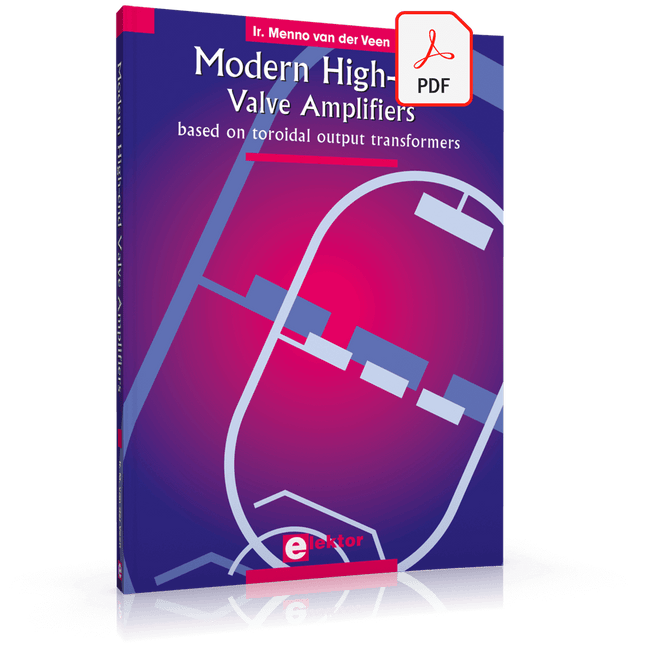
Valve Amplifiers are regarded by many to be the ne plus ultra when it comes to processing audio signals. The combination of classical technology and modern components has resulted in a revival of the valve amplifier. The use of toraidal-core output transformers, developed by the author over the past 15 years, has contributed to this revival. The most remarkable features of these transformers are their extremely wide frequency ranges and their very low levels of linear and nonlinear distortion.
This book explains the whys and wherefores of toroidal output transformers at various technical levels, starting with elementary concepts and culminating in complete mathematical descriptions. In all of this, the interactions of the output valves, transformer and loudspeaker form the central theme.
Next come the practical aspects. The schematic diagram of a valve amplifier often appears to be very simple at first glance, but anyone who has built a modern valve amplifier knows that a lot of critical details are hidden behind this apparent simplicity. These are discussed extensively, in connection with designs for amplifiers with output powers ranging from 10 to 100 watts. Finally, the author gives some attention to a number of special valve amplifiers, and to the theory and practice of negative feedback.
In summary, this book offers innovative solutions for achieving perfect audio quality. Do-it-yourself builders, as well as persons who want to gain a deeper technical understanding of the complex world of audio transformers, valve amplifiers and audio signal processing, will find this book a rich and useful source of information.
The Raspberry Pi A+ Case has been designed to fit both the Pi 3 Model A+ and the Pi 1 Model A+. The high-quality ABS construction consists of two parts. The base features cut-outs to allow access to the microSD Card and the the HDMI, audio/video and USB ports, as well as the power connector.
,
van Udo Bormann
Electronics Projects Archive for Engineers, Makers & Education
Access thousands of electronics projects, Arduino tutorials, audio designs, and power supply circuits with Elektor Classics USB sticks. Designed for younger engineers, university professors, electronics educators,...