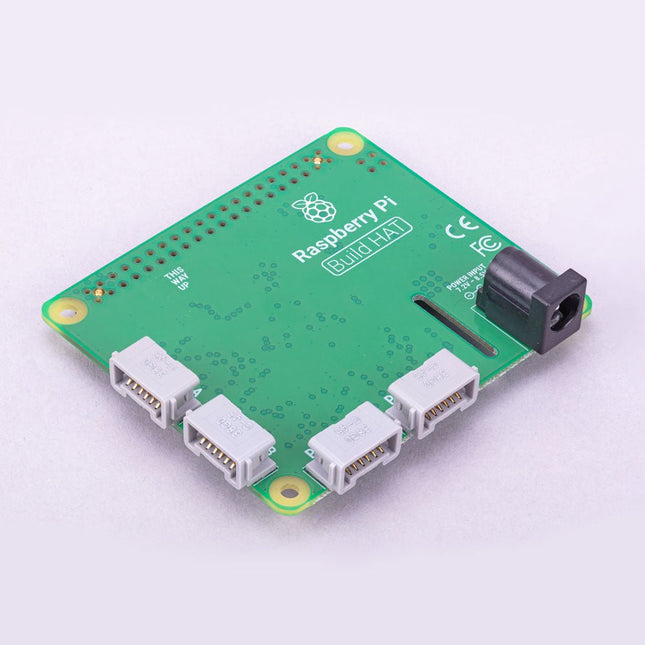
Build robust, intelligent machines that combine Raspberry Pi computing power with LEGO components.The Raspberry Pi Build HAT provides four connectors for LEGO Technic motors and sensors from the SPIKE Portfolio. The available sensors include a distance sensor, a colour sensor, and a versatile force sensor. The angular motors come in a range of sizes and include integrated encoders that can be queried to find their position.The Build HAT fits all Raspberry Pi computers with a 40-pin GPIO header, including?–?with the addition of a ribbon cable or other extension device?—?Raspberry Pi 400. Connected LEGO Technic devices can easily be controlled in Python, alongside standard Raspberry Pi accessories such as a camera module.Features
Controls up to 4 motors and sensors
Powers the Raspberry Pi (when used with a suitable external PSU)
Easy to use from Python on the Raspberry Pi
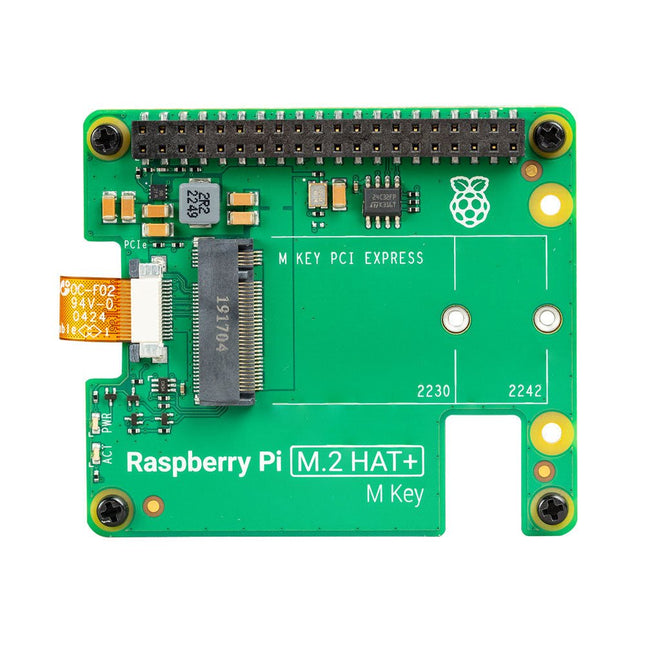
Met de Raspberry Pi M.2 HAT+ kunt u M.2-randapparatuur, zoals NVMe-schijven en AI-versnellers, aansluiten op de PCIe 2.0-interface van Raspberry Pi 5, en ondersteunt snelle (tot 500 MB/s) gegevensoverdracht naar en van NVMe-schijven en andere PCIe-accessoires.
Raspberry Pi M.2 HAT+ ondersteunt apparaten met de M.2 M key edge-connector, in de 2230- en 2242-vormfactoren. Hij kan tot 3 A leveren aan aangesloten M.2-apparaten.
Kenmerken
Ondersteunt single-lane PCIe 2.0-interface (piekoverdrachtssnelheid van 500 MB/s)
Ondersteunt apparaten die de M.2 M Key Edge-connector gebruiken
Ondersteunt apparaten met de 2230- of 2242-vormfactor
Kan tot 3 A leveren aan aangesloten M.2 apparaten
Stroom- en activiteits-LED's
Inbegrepen
1x Raspberry Pi 5 M.2 HAT+
1x Lintkabel
1x GPIO-stapelheader
4x Afstandhouders
8x Schroeven
Downloads
Datasheet
Schematics
Assembly instructions
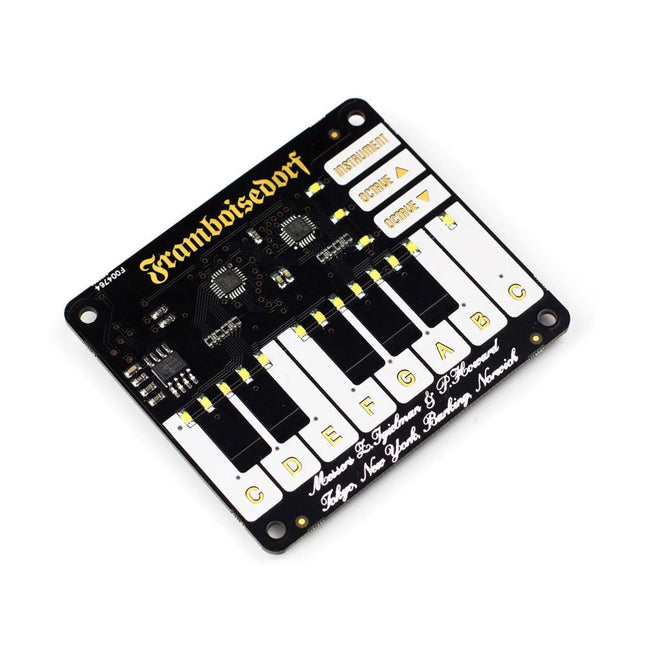
Laat uw innerlijke Mozart bovenkomen met de Piano HAT, een mini muzikale metgezel voor uw Raspberry Pi! De Piano HAT is geïnspireerd op de PiPiano van Zachary Igielman en gemaakt met zijn instemming. We hebben zijn fantastische idee om een kleine piano add-on te bouwen voor de Raspberry Pi overgenomen, deze aanraakgevoelig gemaakt, en netjes afgewerkt met veel van onze kenmerkende Pimoroni lak. Speel muziek af in Python, bedien softwaresynths op je Pi, en pak zelf de controle over hardwaresynthesizers! Kenmerken 16 capacitieve touchpads (elk te koppelen aan hun eigen Python functie!) 13 pianotoetsen (een volledig octaaf) Octaaf omhoog/omlaag knoppen Knop voor instrumentcyclus (ideaal voor gebruik met synthesizers) 16 helderwitte leds (laat ze automagisch oplichten of neem de controle over met Python) 2x Microchip CAP1188 capacitieve touch driver chips Gebruik hem om software- of hardwaresynths te besturen via MIDI Compatibel met alle 40-pins header Raspberry Pi modellen Wordt volledig gemonteerd geleverd Downloads Python library Pinout
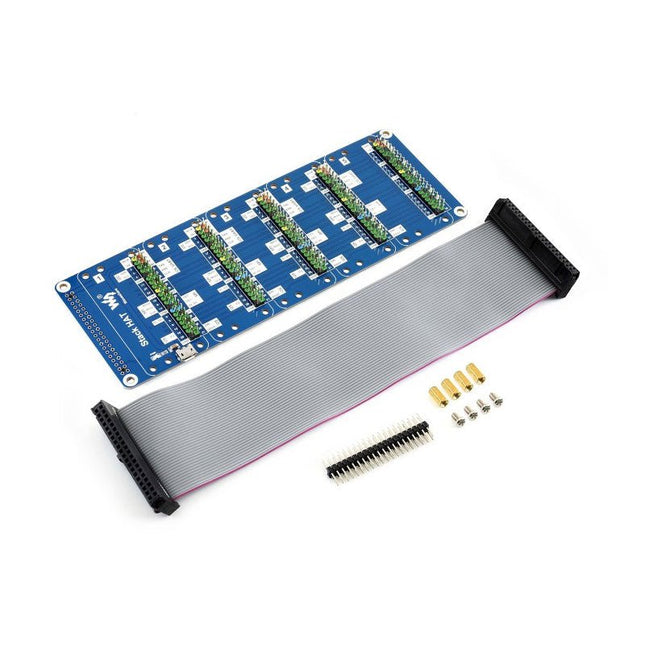
This is an I/O expansion kit designed for Raspberry Pi, which provides 5 sets of 2x20 pinheaders, that means a handy way to 'stack' multi different HATs together, and use them as a specific combination / project. Features Standard Raspberry Pi connectivity, directly pluggable OR through ribbon cable 5 sets of 2x20 pinheaders, connect multi HATs together USB external power port, provides enough power supply for multi HATs Clear and descriptive pin labels for easy use Reserved jumper pads on the bottom side, pin connections are changeable by soldering, to avoid pin conflicts Note: make sure there are no any pin conflicts between the HATs you want to use together before connecting. Specifications Dimensions: 183 × 65 mm Mounting hole size: 3 mm Included 1x Stack HAT 1x Ribbon cable 40-Pin 1x 2x20 male pinheader 1x RPi screws pack (4pcs) x1
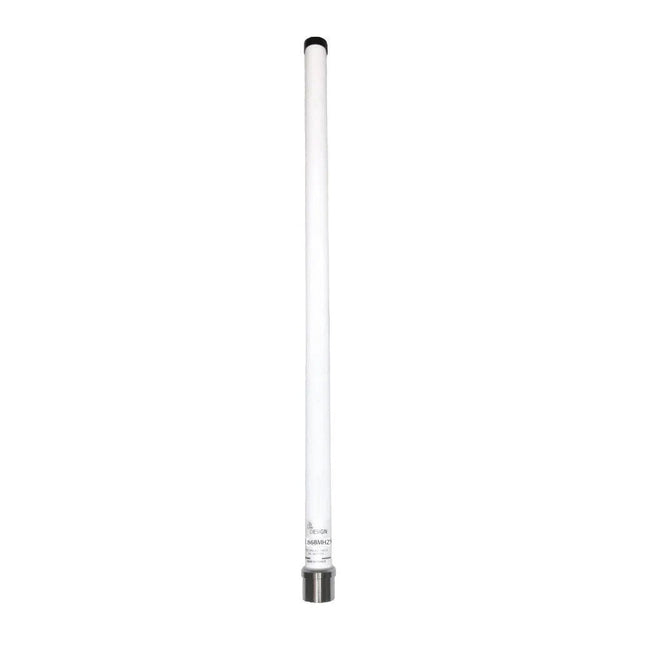
Deze buitenantenne van glasvezel is geoptimaliseerd voor het ontvangen van signalen in de 868 MHz ISM-band en ondersteunt technologieën zoals Sigfox, LoRa, Mesh Networks en Helium. De antenne bestaat uit een halvegolfdipool met een versterking van 4,4 dBi, ingekapseld in een glasvezelradome met een aluminium montagebasis.
Specificaties
Frequentie
868-870 MHz
Antennetype
Dipool 1/2 golf
Connector
N vrouwelijk
Installatietype
Mastdiameter 35-60 mm (montagebeugel meegeleverd)
Winst
4,4 dBi
SWR
≤1,5
Type polarisatie
Verticaal
Maximaal vermogen
10 W
Impedantie
50 Ohm
Afmetingen
52,5 cm
Buisdiameter
26 mm
Basisantenne
32 mm
Bedrijfstemperatuur
−30°C tot +60°C
Inbegrepen
ISM-bandantenne (868 MHz)
Mastbeugel (voor installatie op een mast met een diameter van 35 tot 60 mm)
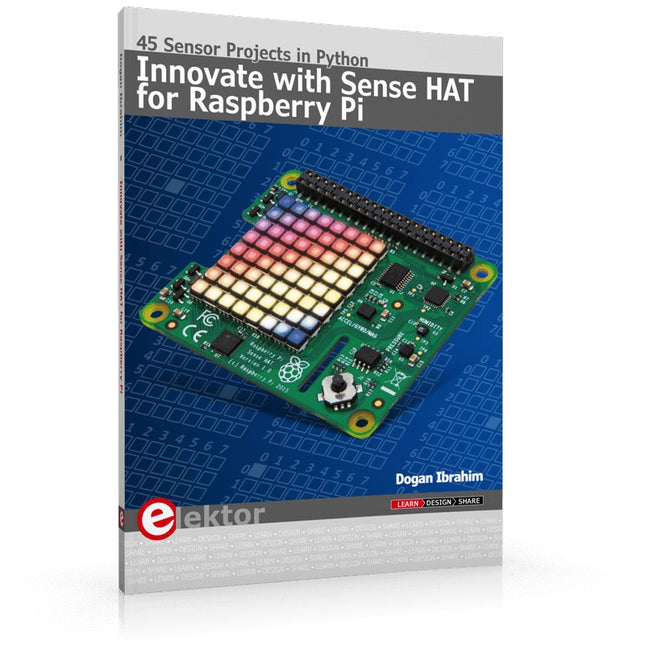
Ready to explore the world around you? By attaching the Sense HAT to your Raspberry Pi, you can quickly and easily develop a variety of creative applications, useful experiments, and exciting games.
The Sense HAT contains several helpful environmental sensors: temperature, humidity, pressure, accelerometer, magnetometer, and gyroscope. Additionally, an 8x8 LED matrix is provided with RGB LEDs, which can be used to display multi-color scrolling or fixed information, such as the sensor data. Use the small onboard joystick for games or applications that require user input. In Innovate with Sense HAT for Raspberry Pi, Dr. Dogan Ibrahim explains how to use the Sense HAT in Raspberry Pi Zero W-based projects. Using simple terms, he details how to incorporate the Sense HAT board in interesting visual and sensor-based projects. You can complete all the projects with other Raspberry Pi models without any modifications.
Exploring with Sense HAT for Raspberry Pi includes projects featuring external hardware components in addition to the Sense HAT board. You will learn to connect the Sense HAT board to the Raspberry Pi using jumper wires so that some of the GPIO ports are free to be interfaced to external components, such as to buzzers, relays, LEDs, LCDs, motors, and other sensors.
The book includes full program listings and detailed project descriptions. Complete circuit diagrams of the projects using external components are given where necessary. All the projects were developed using the latest version of the Python 3 programming language. You can easily download projects from the book’s web page. Let’s start exploring with Sense HAT.
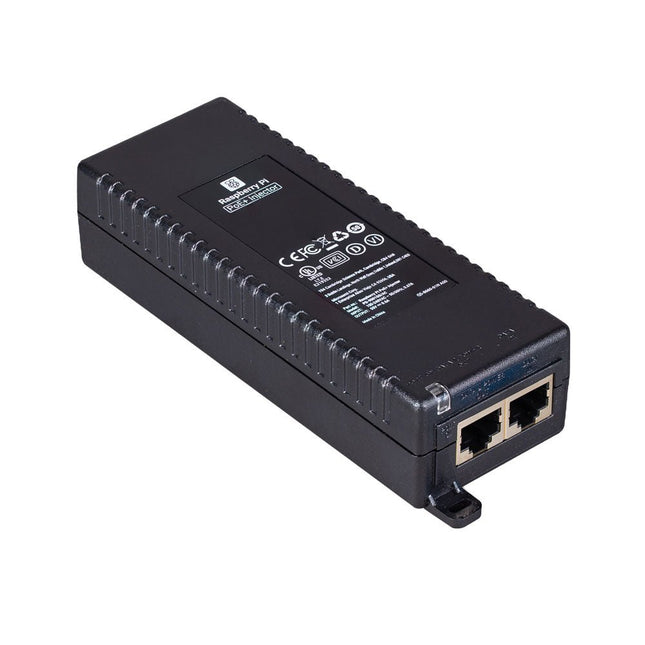
De Raspberry Pi PoE+ Injector voegt Power-over-Ethernet (PoE) functionaliteit toe aan een enkele poort van een niet-PoE Ethernet switch, en levert zowel stroom als data via één Ethernet-kabel. Het biedt een plug-and-play, kosteneffectieve oplossing voor het stapsgewijs introduceren van PoE capaciteit in bestaande Ethernet netwerken.
De PoE+ Injector is een single-port, 30 W apparaat geschikt voor het voeden van apparatuur die voldoet aan de IEEE 802.3af en 802.3at standaarden, inclusief alle generaties Raspberry Pi PoE HAT's. Het ondersteunt netwerk pass-through snelheden van 10/100/1000 Mbps.
Opmerking: Een aparte IEC netsnoer is vereist voor gebruik (niet meegeleverd).
Specificaties
Gegevenssnelheid
10/100/1000 Mbps
Ingangsspanning
100 tot 240 V AC
Uitgangsvermogen
30 W
Uitgangsvermogen op pinnen
4/5 (+), 7/8 (–)
Nominale uitgangsspanning
55 V DC
Gegevensconnectoren
Afgeschermde RJ-45, EIA 568A en 568B
Stroomaansluiting
IEC c13 netvoeding (niet meegeleverd)
Opslagvochtigheid
Maximaal 95%, niet-condenserend
Werkingshoogte
–300 m tot 3000 m
Werkingsomgevingstemperatuur
10°C tot +50°C
Afmetingen
159 x 51,8 x 33,5 mm
Downloads
Datasheet
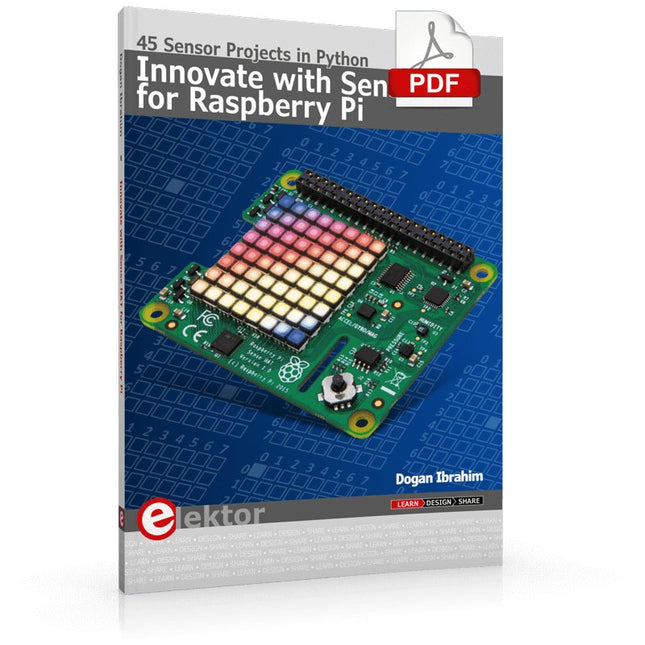
Ready to explore the world around you? By attaching the Sense HAT to your Raspberry Pi, you can quickly and easily develop a variety of creative applications, useful experiments, and exciting games.
The Sense HAT contains several helpful environmental sensors: temperature, humidity, pressure, accelerometer, magnetometer, and gyroscope. Additionally, an 8x8 LED matrix is provided with RGB LEDs, which can be used to display multi-color scrolling or fixed information, such as the sensor data. Use the small onboard joystick for games or applications that require user input. In Innovate with Sense HAT for Raspberry Pi, Dr. Dogan Ibrahim explains how to use the Sense HAT in Raspberry Pi Zero W-based projects. Using simple terms, he details how to incorporate the Sense HAT board in interesting visual and sensor-based projects. You can complete all the projects with other Raspberry Pi models without any modifications.
Exploring with Sense HAT for Raspberry Pi includes projects featuring external hardware components in addition to the Sense HAT board. You will learn to connect the Sense HAT board to the Raspberry Pi using jumper wires so that some of the GPIO ports are free to be interfaced to external components, such as to buzzers, relays, LEDs, LCDs, motors, and other sensors.
The book includes full program listings and detailed project descriptions. Complete circuit diagrams of the projects using external components are given where necessary. All the projects were developed using the latest version of the Python 3 programming language. You can easily download projects from the book’s web page. Let’s start exploring with Sense HAT.
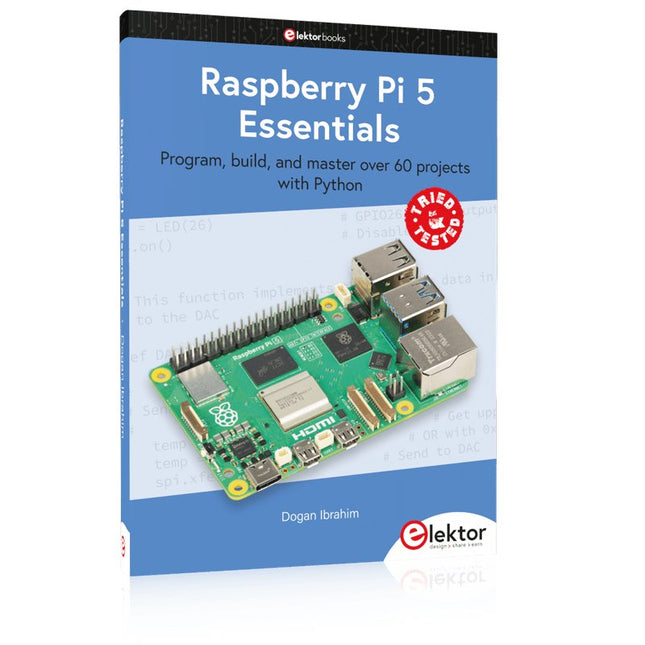
Program, build, and master over 60 projects with Python
The Raspberry Pi 5 is the latest single-board computer from the Raspberry Pi Foundation. It can be used in many applications, such as in audio and video media centers, as a desktop computer, in industrial controllers, robotics, and in many domestic and commercial applications. In addition to the well-established features found in other Raspberry Pi computers, the Raspberry Pi 5 offers Wi-Fi and Bluetooth (classic and BLE), which makes it a perfect match for IoT as well as in remote and Internet-based control and monitoring applications. It is now possible to develop many real-time projects such as audio digital signal processing, real-time digital filtering, real-time digital control and monitoring, and many other real-time operations using this tiny powerhouse.
The book starts with an introduction to the Raspberry Pi 5 computer and covers the important topics of accessing the computer locally and remotely. Use of the console language commands as well as accessing and using the desktop GUI are described with working examples. The remaining parts of the book cover many Raspberry Pi 5-based hardware projects using components and devices such as
LEDs and buzzers
LCDs
Ultrasonic sensors
Temperature and atmospheric pressure sensors
The Sense HAT
Camera modules
Example projects are given using Wi-Fi and Bluetooth modules to send and receive data from smartphones and PCs, and sending real-time temperature and atmospheric pressure data to the cloud.
All projects given in the book have been fully tested for correct operation. Only basic programming and electronics experience are required to follow the projects. Brief descriptions, block diagrams, detailed circuit diagrams, and full Python program listings are given for all projects described.
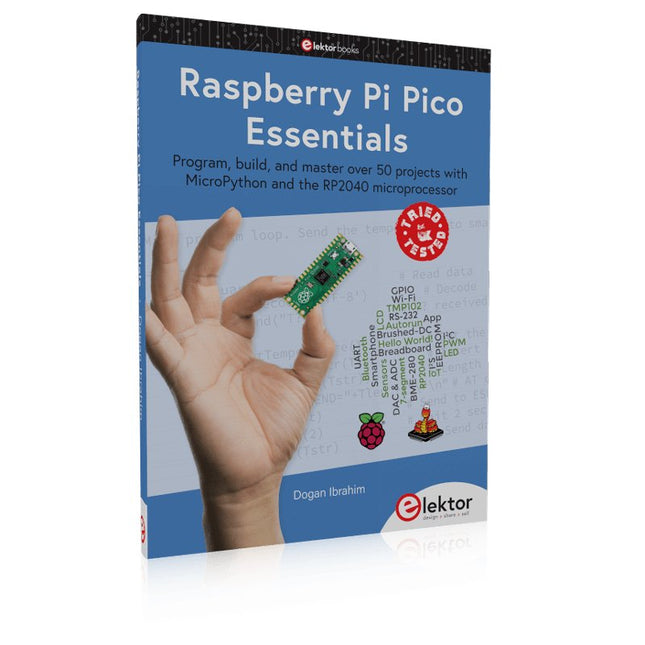
De Raspberry Pi Pico is een krachtige microcontrollermodule die speciaal ontworpen is voor fysiek computergebruik. Microcontrollers verschillen van single-board computers, zoals de Raspberry Pi 4, doordat ze geen besturingssysteem hebben. De Raspberry Pi Pico kan geprogrammeerd worden om een enkele taak zeer efficiënt uit te voeren binnen real-time regel- en besturingstoepassingen die snelheid vereisen. De 'Pico', zoals we hem noemen, is gebaseerd op de snelle, efficiënte en goedkope dual-core ARM Cortex-M0+ RP2040 microcontroller chip die tot 133 MHz werkt en beschikt over 264 KB SRAM, en 2 MB Flash geheugen. Behalve het grote geheugen heeft de Pico nog meer aantrekkelijke eigenschappen, waaronder een groot aantal GPIO pinnen, en populaire interface modules zoals ADC, SPI, I²C, UART, en PWM. Als klap op de vuurpijl biedt de chip snelle en nauwkeurige timing modules, een hardware debug interface, en een interne temperatuursensor.De Raspberry Pi Pico is gemakkelijk te programmeren met populaire talen op hoog niveau, zoals MicroPython en of C/C++. Dit boek is een inleiding tot het gebruik van de Raspberry Pi Pico microcontroller in combinatie met de programmeertaal MicroPython. De Thonny ontwikkelomgeving (IDE) wordt in alle beschreven projecten gebruikt. Er staan meer dan 50 werkende en geteste projecten in het boek, die de volgende onderwerpen behandelen:
MicroPython installeren op Raspberry Pi Pico met behulp van een Raspberry Pi of een PC
Timer interrupts en externe interrupts
Analoog/Digitaal Converter (ADC) projecten
Gebruik van de interne temperatuursensor en externe temperatuursensor chips
Datalogging projecten
PWM, UART, I²C, en SPI projecten
Wi-Fi en apps gebruiken om met smartphones te communiceren
Bluetooth en apps gebruiken om met smartphones te communiceren
Digitaal/Analoog Converter (DAC) projecten
Alle projecten die in het boek vermeld worden zijn volledig getest en werken. Alleen basis ervaring met programmeren en elektronica is nodig om de projecten te volgen. Voor alle beschreven projecten worden korte beschrijvingen, blokschema's, gedetailleerde schakelschema's, en volledige MicroPython programma-overzichten gegeven. Lezers kunnen de programma-overzichten vinden op de Elektor webpagina die ter ondersteuning van het boek werd gemaakt.
De Raspberry Pi Bumper is een opklikbare siliconen hoes die de onderkant en randen van de Raspberry Pi 5 beschermt.
Kenmerken
Flexibele siliconenrubberen bumper uit één stuk
Maakt gemakkelijke toegang tot de aan/uit-knop mogelijk
Bevestigingsgaten blijven toegankelijk onder de bumper
Downloads
Datasheet
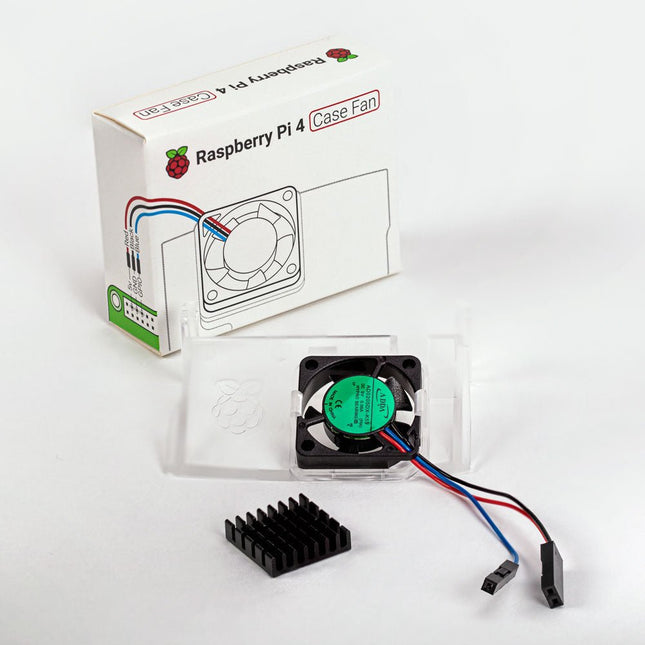
Designed for overclockers and other power users, this fan keeps your Raspberry Pi 4 at a comfortable operating temperature even under heavy load. The temperature-controlled fan delivers up to 1.4 CFM of airflow over the processor, memory, and power management IC. The bundled heatsink (18 x 8 x 10 mm) with self-adhesive pad improves heat transfer from the processor. The Raspberry Pi 4 Case Fan works with Raspberry Pi 4 and the official Raspberry Pi 4 case.